Where you from?

No sleep ’til Brooklyn – regardless of neighborhood

Fashion Night Out. For most New Yorkers, the Thursday on which it falls each year tends to be an occasion to go door-to-door in the Meatpacking or Madison Ave. shopping districts and take a look at the latest styles fresh off of the runway. Two years ago, it fell on my birthday but last year, it was the first major test that didn’t fall on a weekend for yours truly. Saturday night ended up with its own rhythm and cadence, as crushloads of tourists and nightcrawlers made their way out each week until the wee hours of the morning. The second Thursday in September was a different beast though, as throngs of drunken, overdressed, and uninhibited New Yorkers made their way out, clogging certain parts of town without a care in the world. Unfortunately, I still had a job to do, and I sure got anything I had coming to me that night.

One fare wanted to go to the heart of the Upper East Side, right through where Tiffany’s and Cartier call home in the Big Apple. Another one dragged me from Pastis all the way down to Battery Park City, only to realize that she forgot her iphone and *had* to get back uptown for it, freaking out the whole way. I have no idea why the bitch just left my cab on 14 St, only to stick four rumpled $1’s in my hand because “that’s all I have”, as I sat in traffic helplessly wondering why she couldn’t pony up the other $12 and change that I was owed. The area of 6 Ave. in front of Radio City Music Hall was down to one lane because of roadwork and crosstown traffic blocking the street, leading the cop directing traffic to yell “Move the fuck out” when it was my turn to go. All of that paled in comparison to what happened in front of Penn Station.

I dropped a fare off there so he could catch his train back home in the suburbs. Sure enough, the dispatcher in front of the line was out there late that night but with all the horns blaring and people out and about, I wanted to get out of the area ASAP. Sure enough, a red light ensured that that wasn’t the case. As I sat there, he walked over:

“You didn’t hear me”

“I didn’t hear a lot of things, it’s busy out here tonight.”

“Well, I whistled you over and you didn’t come. Are you deaf?”

“I’m listening to you aren’t I?”

“Doesn’t matter. I’m writing you a ticket for refusing to enter the dispatch line. Where you from?”

“What? That doesn’t even matter. I’m from New Jersey for your information.”

By now, the couple that had entered my cab and requested to go downtown got a big kick out of this but I sure as hell wasn’t laughing. This wasn’t the NYPD that I was talking to and anyone wearing brown was not on the same level in my book.

“You’re supposed to enter the line and now you’ll be getting a ticket from me.”

Sure enough, he walked right around the cab and entered the medallion number down.

“Great, I’ll know that for next time.”

“You should have known that for this time. Where you from again?”

“What the hell does it matter? It’s New Jersey, alright! I grew up around here and I don’t know what  your problem is with that. I didn’t ask you where you’re from.”

“It doesn’t matter. Have a nice day.”

“You too.”

With that, I went through the light and was on my way to my passenger’s destination.

If there’s one thing that defines New Yorkers more than what they do for a living, it’s where they’re from and just as importantly, where they call home in the five boroughs.

No one would argue that America deserves the moniker of “Melting Pot’ when assigning nicknames and identities to the nations of the world. Ever since the days of the Pilgrims, Vikings, Chinese, or whoever got here first, migrants from faraway lands have come to the shores of America, seeking a better life. Where they ended up became the real crux of the story, as neighborhoods of tightly-bound ethnic and socioeconomic groups formed in New York, only to dissolve upon the inhabitants ascendance up the economic ladder, or voluntary removal upon arrival of a different group.

Little Italy? It may have been home to the Gangs of New York that were so brutally depicted in Scorsese’s film of the same name but now, you’re more likely to find buildings with Mandarin on the signs than anything Italian once you’re away from Mulberry Street. The Lower East Side Tenement Museum calls Orchard Street home but the blue-collar Jews that lived in the squalid conditions shown there are long gone; their slow migration starting as soon as the Williamsburg Bridge opened in 1903. Across the island, it was the same story. Hell’s Kitchen was once deserving of that moniker as most people would dare not trek west of 8 Ave. unless they had to. Much of the manufacturing and activities on the docks were performed by the Irish, their gangs having been called the Westies. Ultimately, the fate of the West Side was tied in redevelopment of blocks that had become slums, with the nadir of the rebirth having been depicted via musical numbers in West Side Story. Behind the Rumble and the Dance was the undeniable truth that the Puerto Ricans were moving into areas long outside of their Spanish Harlem mainstay, as their numbers swelled in the 1950’s. LBJ’s Immigration Rights Act was signed not too long afterwards, paving the way the “browning of America” that still continues on to this day.

One of my perks of my job is that I get to see many parts of the city that I rarely made it too when my preferred mode of transportation was by foot or subway. Both of those can get you far, but certainly not quickly or to underserved areas like Eastern Queens or Alphabet City. Having a set of wheels opened up a lot of new frontiers to me, in a different way then the frontiers of a new neighborhood are opened up for those who sail past the Statue of Liberty and wish to call New York home. Astoria may still have some of the best Greek restaurants and diners in the city but it’s also home to a burgeoning Egyptian population as well now. Bay Ridge and Bensonhurst was the home of Saturday Night Fever but in the 21st Century, you’re much more likely to find Halal food there than someone walking down the street in a Leisure Suit or praying to a statue of the Virgin Mary.The area has changed so much so that I recently had this discussion with one of the senior players with the La Boule New York:

“So how’s work?”

“It’s good. Been at it for over 6 months now. I get to see the city and the money isn’t bad. You’re still in Sunset Park, right?”

“Indeed. Been there a long time too.”

“I drop people off now and then there. Isn’t that area mostly Polish and Hispanic?”

“Used to be. Now, it’s lots of Chinese and the Arabs are coming up from Bay Ridge.”

“I didn’t know that.”

“Things change quick in New York.”

And so it goes.

Even Harlem, which has a name of Dutch origin and was once Manhattan’s traditional seat of black culture, is starting to see the minority community there becoming a minority. It hasn’t happened yet, but other ethnic groups searching for cheaper rent, decent subway access, and proximity to Central and Morningside Parks, are moving into the area. Those who have been entrenched are now being forced out, victims of an internal migration from other parts of the city.

And so it goes, again.

Cities, by nature, must be dynamic places in order to survive. When they stagnate, as was the case in the 1960’s, and 1970’s, the spiral of urban decay and decreasing property values takes hold and with it, the loss of the tax base. What New York is going through now is the opposite, as huge areas have become renewed in the last 20 years both by newcomers from areas not traditionally represented in the city’s ethnic composition and from those looking to move away from the suburbs and back to an urban lifestyle that their forefathers had perhaps enjoyed in a previous century. This constant change makes New York unique in the pantheon of America’s urban cores, as many cities are struggling to find prosperity after the collapse of housing prices and loss of a manufacturing base that has decimated population centers from coast to coast in the last few decades.

Thankfully, that’s not the case in Gotham. What was recognizable to me in the 1980’s has become totally different now and will also be the case when future generations return to familiar areas of New York; only to find that the cycle of change has repeated itself once again. It should come as no surprise that the United Nations, formed after the deadliest conflict of the 20th century, was placed in New York after a extensive search for a permanent home. The flags that fly in front of it represent nearly every nation on Earth, as much as the city that surrounds the General Assembly and Secretariat Buildings (the UN is international property and therefore, is not technically considered part of New York City) is also home to immigrants from nearly every corner of the globe. Just as it has been the case since the founding of New Amsterdam, how those groups migrate and settle forms the basis for much of the drama that plays itself out every day across the Big Apple.

A few months ago, I ended up pulling into the driveway of a hotel in Times Square that shall remain nameless. Of course, I was looking for a fare and came across yet another, friendly dispatcher:

“Did I tell you to come in here?”

“No, but I figured that looking for a fare here wouldn’t hurt.”

“I didn’t whistle you in and unless you have someone, don’t drive through here. Where you from?”

“New Jersey. Why do you have to look in my trunk, there’s nothing in there but my bag…”

I popped the trunk and let him have his look, waiting for the relief on his face when he would realize that I didn’t have a bomb with me.

“Well, be on your way and don’t come in here again unless you have someone or one of us calls you in.”

“Duly noted.”

With that, I took a deep breath and was on my way back onto the streets, hoping that my next fare would give me a better insight to the ever-changing mosaic that still characterizes New York.

Rockefeller Center flags
Prince of Broken Hearts

Etan Patz

In an average shift, I’ll put on around 140-170 miles on the particular Taxi that I’m driving that night. Lights and corners eventually melt into runs, which melt into hours, which eventually melt into my 12 hour blocks of work. The chorus of sirens, traffic jams, and human obstructions that I’ll inevitably face will add some hue and tone to the composition of the night but once I turn in around 5 in the morning, it just becomes another pile of transactions on the receipt that adds up my fares and charges for the night.

It was with somewhat large fanfare a few weeks back that Prince Street in SoHo was blocked off with flashing lights and yellow tape. Most of us in New York were well aware of the reason for the extended investigation that the police and the FBI were conducting. What many were previously unaware of was the story behind the reopening of one of the city’s daunting and saddening cold cases that anyone could remember. Like an old wound that fully refused to heal, anyone that went by Prince Street during that week was reminded of the 6 year old that captured the City’s, and ultimately, the nation’s attention back in 1979.

Etan Patz set out for class on May 25 of that year, like any boy who was looking forward to the end of his school week. It was only a two block walk to his bus on West Broadway but somehow, he never made it to his ride or to school that day. When it was discovered that he hadn’t returned home, a frantic hunt for the child was undertaken, triggering a sizable response that was somewhat reminiscent of the Son of Sam episode nearly two years earlier. Before the internet and social media took hold as forms of communication, the evening news became the go-to source for updates on this story and the hysteria that this caused led to Etan becoming the first child pictured on the side of a milk carton. Kids were missing and exploited long before him but it was his disappearance that changed how society responded to this problem and dealt with it, even if it wasn’t the most prudent or helpful solution possible.

I remember when I was growing up how “Just Say No” was the hot topic for kids both in school and on the news, as everyone from the First Lady on down campaigned to dissuade people from using drugs. What was an anti-drug slogan would ultimately be seen as one of the first sound bites for millions of us that were starting to come of age at the time. Eventually, the people and cases that rocked the city and the country at large in the following decade were reduced down to the victim or the locale in which they took place. Adam Walsh, Bernie Geotz, Howard Beach, Lisa Steinberg, the Preppie Murderer, the Central Park Jogger, Crown Heights, and Rodney King became synonymous with crimes that sensationally became worse than the one that preceded it. Nearly all ended in trials, tears, and piles of finger pointing, with the larger issues of race relations, civil conduct, and respect for fellow man remaining on the back burner throughout all of the ordeals. By the early 90’s, the United States had become a more violent, segregated, and stratified society where certain groups and races were still unable to assimilate and fully participate in the American Dream.

Lost in the midst of all this was Etan Patz.

It was no coincidence that the year in which he disappeared also saw Kramer vs. Kramer win Best Picture. No, Etan’s parents were not divorced but much of the film focused on the fight for the child. By that time, divorce and the breakdown of the postwar nuclear family was already in full effect along with an accompanying rise in the crime rate across the board. At the same time of this malaise, the SoHo that had characterized industrial and commercial New York for generations had been accidentally been preserved thanks to Robert Moses’ unbuilt Lower Manhattan Expressway. Loads of cast-iron gems were saved from the wrecking ball or from massive alterations due to the state of limbo that the highway was in for a quarter of a century. All of these factors converged at the time of Etan’s disappearance as the area was in a state of rebound, full of artists colonies that produced such seminal creative incubators as The Kitchen. When those became priced out, the Soho of today took hold as Prince Street is now known for such haute couture boutiques as Baby Phat, Miu Miu, and Nicole Miller. The neighborhood at large has become the go-to high end mall when shoppers want to avoid the crowds and tourists that zealously flock to Madison Ave. in the 50’s and 60’s or to the bottom of the High Line. The old industrial buildings lend an air of grittiness to a set of streetscapes that’s clearly targeted for the now-infamous 1% but thankfully, there remained one outlet of the old ‘hood that has withstood the gentrification and upward climb in rents:

Fanelli’s.

Years ago, an ex of mine and I went there for dinner after running a bunch of her errands down on Broadway.The neon sign, old wooden bar, and pressed tin ceiling were a throwback to the restaurants that had once dotted much of the island. As we ate our meal on the red and white checkered tablecloths, I couldn’t help but wonder how much history that place had seen throughout the decades of surrounding change. I still remember the meal of chicken parmesan and our walk to the eatery through a part of town that at the time, I had hardly ever seen foot in but now, it’s obviously a different story. Like so many streets in SoHo, I cut down Prince to avoid the traffic on Houston Street or Broadway when the shoppers are out in full force. The police tape and investigators are long gone and once again, Etan Patz’s disappearance has been relegated to the cold case files as it was for so many years. On my way out to head to the subway with my girlfriend at the time, the thought going through my head that night was the same that I have today, as I yearn for the day when the Patz family can finally learn the truth and move on from their heartbreaking ordeal:

If only those walls could talk.

Prince Street, looking west from Fanelli’s

Red Light/Green Light

Waiting for the first domino to fall – Madison Ave.

“Traffic lights restrain your freedom to cross a street whenever you wish.”

-Ayn Rand, The Fountainhead

When I was little, I used to be like all the other kids in the suburbs and play games – real games that didn’t involve a Wii console and a connection to my friends in other houses. Much has been written about the demise of outdoor play and surely I miss those innocent days when a backyard and a set of imaginations were all that was needed in order to have some fun and quality time spent with friends. Among the games I miss were Red Rover, Hide and Go Seek, and simple tag .None of them involved hundreds of dollars of prep or waiting on line overnight at the local big box store for the latest edition to be released and when one round was over, another could begin without any hard feelings of serious implications of cheating.

All of those games involved people chasing, evading, or finding one another…which could loosely translate to what I currently do for my job. Even Frogger (which to be fair, was a video game), runs through my mind ever since I’ve had to cross a street in New York City. Anyone who’s ever seen the classic Seinfeld episode will be reminded of George’s effort to dodge traffic at the end, and how seemingly random gameplays end up translating to real life years after one first plays them.

Nowhere was this more true for me than when it came to Red Light/Green Light.

For those of you that never attempted it, the premise was simple. One person would stand facing the wall and yell “Green Light”. All the other kids would start out on a line and run towards the end of the room or playing area. When the caller yelled out “Red Light”, all the runners had to stop by the time the caller turned around and looked. If you were moving, you had to go back a certain number of steps or even to the starting line. First person to cross the end during a “green light” phase became the next caller, and so it went.

Needless to say, I wasn’t very good at it. Oh sure, I could run but when “red light” was called out, I stumbled. Stopping on a dime was never my forte and if I held back, someone would inevitably beat me and take the turn as the next caller. For the record, I did win once in a while…but that was my first realization that even blind squirrels find their nuts every now and again.

Flash forward 20 years and change and now, I get to play those games every day during work. Red Rover and Frogger when I have to maneuver across an Avenue to reach a crosstown street, Hide and Go Seek when I wish to evade the N.Y.P.D., and Red Light/Green light during the day, and evening, and night, and…always.

Objectivists who have read Ayn Ran will cringe at Elsworth Toohey’s above quote since it’s the epitome of his philosophy of selflessness. Much as the TLC is needed to regulate the industry, traffic lights are needed in order to provide sense and order to the chaos that characterizes the city streets. For many years, I was a pedestrian when it came to navigating the city and never gave much thought as to the rhythm and cadence that the tricolored machines imposed on surface travelers but once I took the wheel last summer, all of that changed as fast as a red to green phase.

Most of my fellow drivers probably don’t give much thought to how the lights in New York work but people like me that can’t shut their overactive brains off are always pondering the complexities of life and how to tie seemingly disparate threads together in ways that others can’t visualize. Like some odd form of string theory, what goes on in Midtown can affect the flow of vehicles scores of blocks away.

Don’t believe me? Here’s how.

On the major north-south avenues, each light has a red and a green phase. If a light going uptown turns green, the next one will turn green six seconds later. That’s 10 lights in a minute if you’re taking someone to Harlem from the Lower East Side and since 20 blocks north-south equals one mile, the flow of traffic will be regulated, at 30 miles per hour. Seems like some easy piece of social engineering, right?

After a few weeks of driving, I noticed that loads of lights in the mid-30’s bucked this trend. Big time. There are tunnels on either end of those streets and so the green phases on the avenues crossing those streets was shortened in order to allow for crosstown traffic to flow easier. Diagonal streets like Broadway will also cause havoc when intersecting with two other arteries, as is the case right in front of Lincoln Center. The result? A three-phase intersection that has to accommodate everyone but ends up pleasing no one. This is another reason why I *never* take 81 St coming out of the Central Park Transverse that leads onto it. You could write a book in the time it takes to wait for the light at Columbus Ave. to change, not that I ever entertained the thought. Still following?

I hope so, since neither of these don’t account for the human element.

Somewhere in a city government building, someone (or someones), has the power to change the lights. Actually, it’s a computer that can adjust to stoppages in traffic to let it by adjusting the phases of a light. Two-way section of Third Ave. moving too slow at rush hour? Theaters letting out all at once on matinee night? Rangers game went into double overtime? No sweat. The adjustments will have been made accordingly. Some of my worse nights have been where a street was moving well one hour and an hour later, it was jammed. The effort to stay ahead of the changes failed once a rainstorm started or an event let out too late and for all the tweaks to the traffic control devices and extra police deployed to the streets, the result is always the same:

You’ll end up at a red light at some point.

When I was 5, I had my tonsils taken out and spent a few days in the Hospital. I was scared to death at the time and looking back on it years later, I realized that it was one of the last times I ever saw my parents together and happy to be around each other. One of the toys I ended up playing with while I was recovering was a miniature cityscape with streets on it that had traffic lights on every corner. A magnet placed underneath the toy could change them from red to green, simply by rotating it. I loved being able to control the streets at will and make the cars move to their destinations in an orderly fashion, along with creating the occasional “accident”.

Today, I have my own car to control but that’s where the similarities end. On a number of occasions, I’ve had the experience of giving the gentility of the Upper East Side a ride home:

“Hey there, where to?”

“3 Ave. and 86 St.”

“Sure thing, all of the lights move well up 3 Ave. so we should zip there once we’re past the bridge.”

“That’s nice, but I prefer Park Ave. It’s a much more scenic ride.”

Oh well…at least I’ll have much to ponder at the red lights that I’ll hit every 8 blocks.

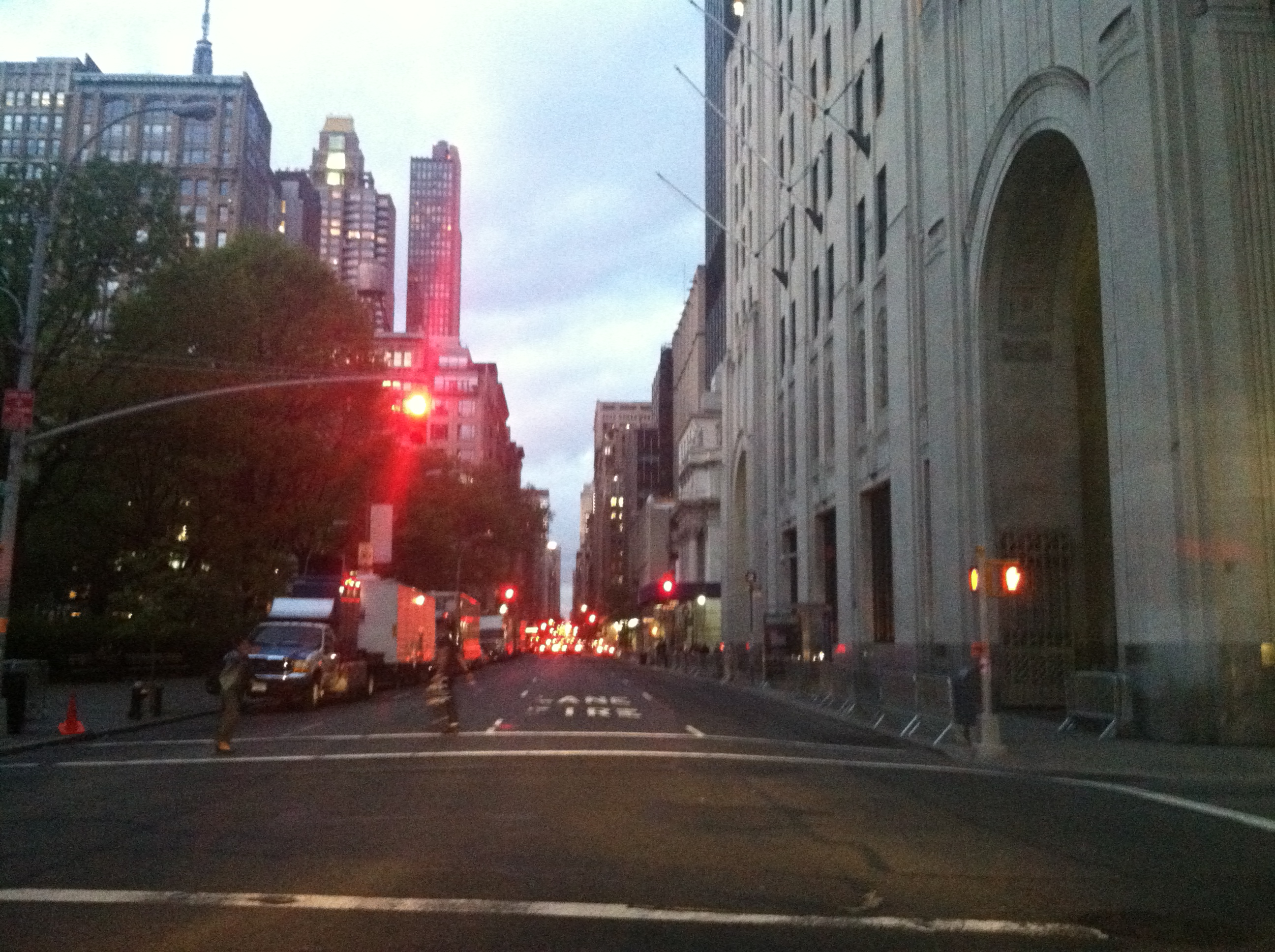
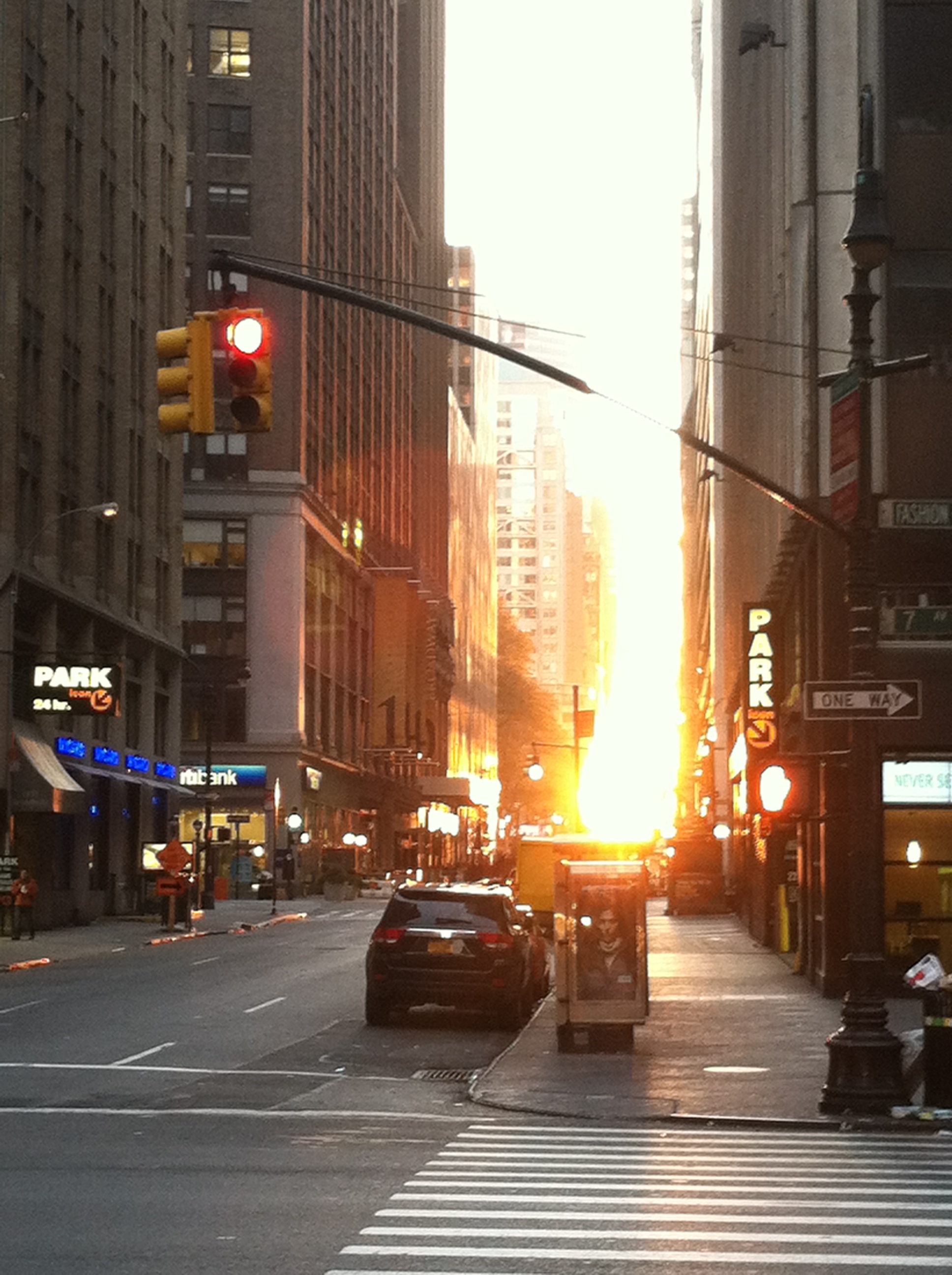
Red, yellow, and green – Garment District

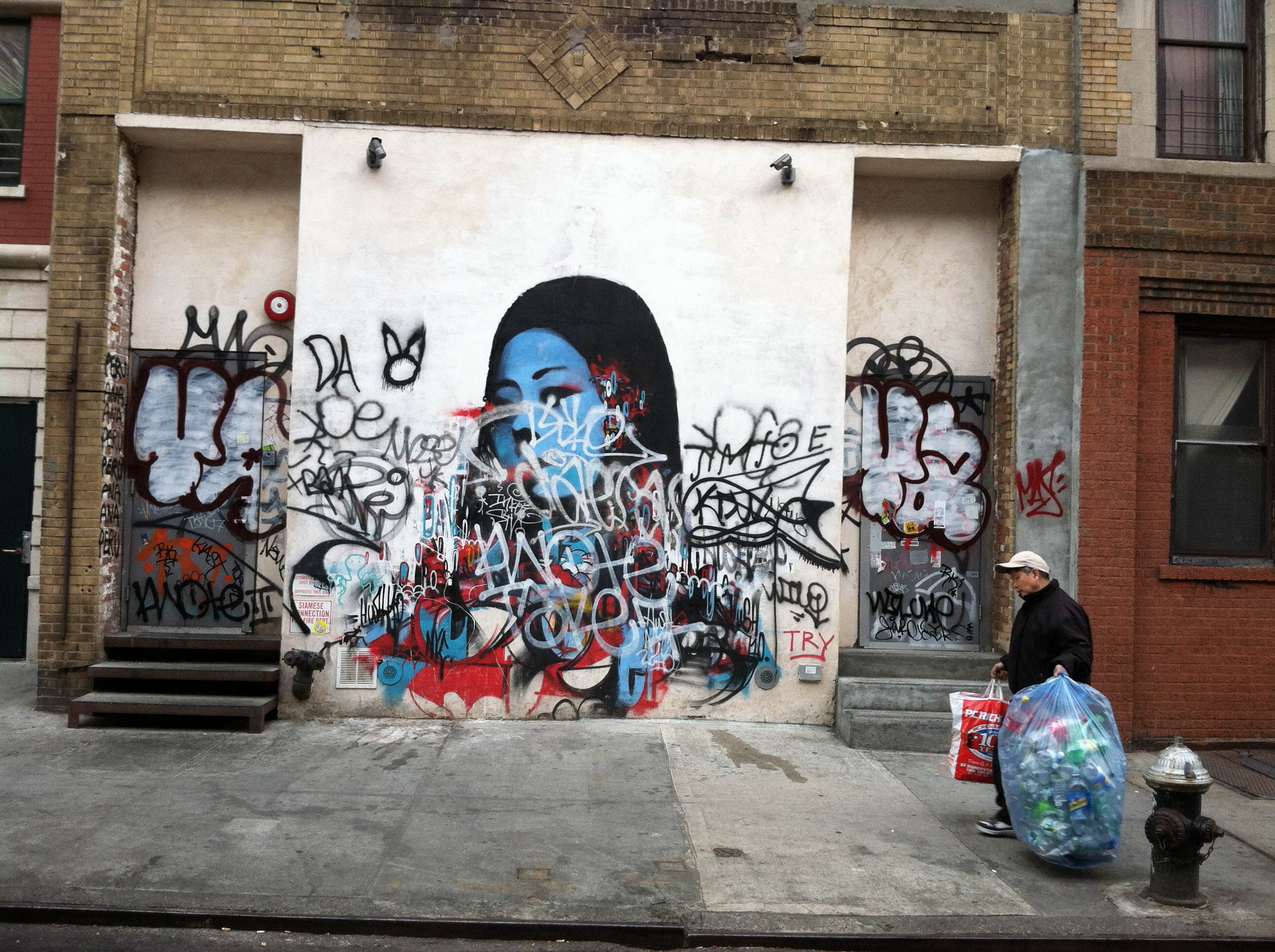
Tag! You’re it.

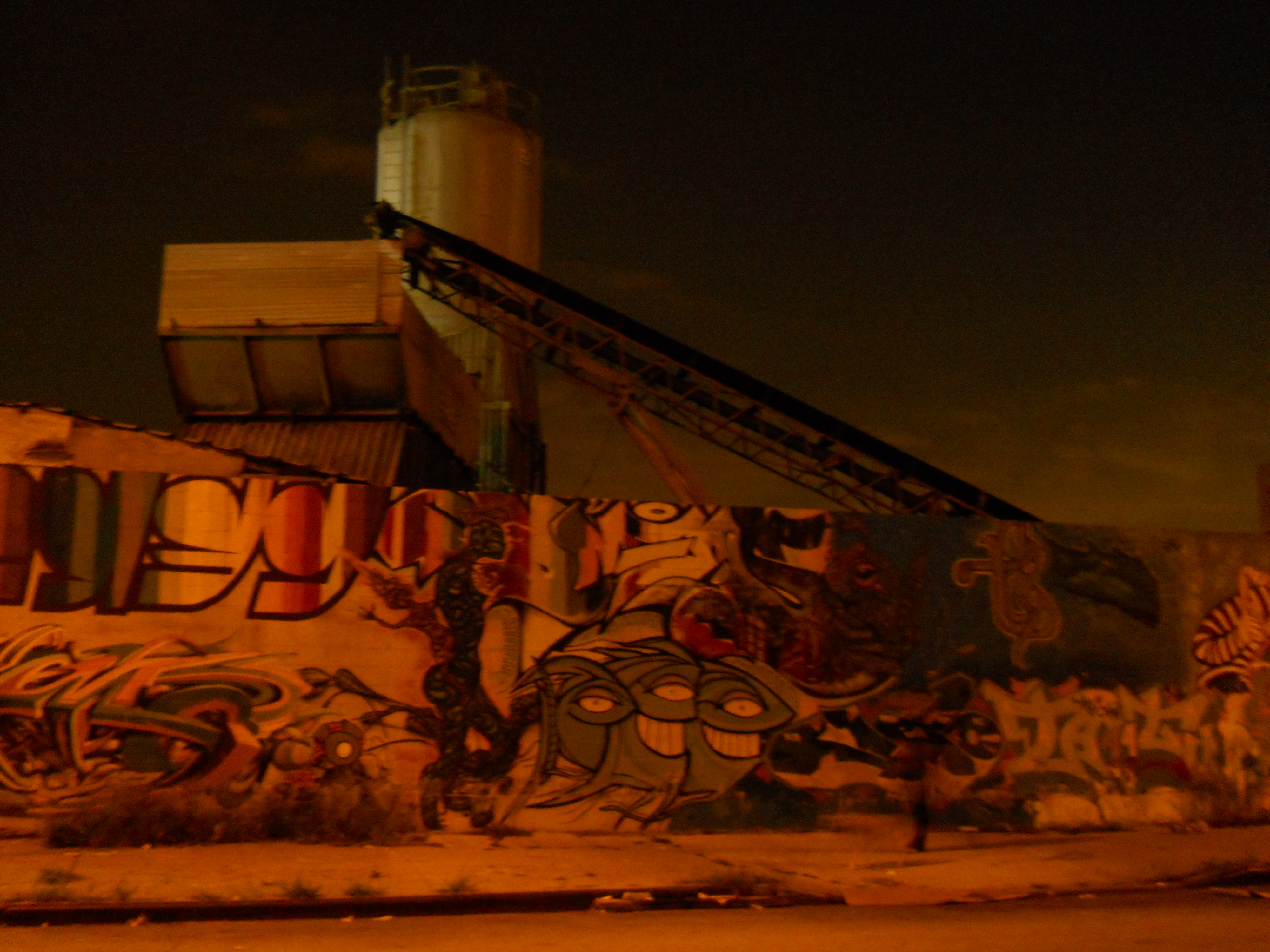
Knickerbocker Ave – Bushwick

Graffiti. It’s a form of communication as old as cities themselves and coincidentally, there’s no shortage of it in the Big Apple. One of the things I wondered when I started my job was how much of it was still existed this far into the 21st century. Now, all of you hipsters and millennials might be surprised to know that graffiti was once one of the biggest problems in the city, right up there with crumbling housing, Subways that walked instead of ran, and fiscal insolvency. Thankfully, that’s no longer the case.

Flash back to 1981. Ed Koch is running for re-election, the Iranian Hostages return home from 444 days in captivity, and President Reagan comes a stone’s throw away from being assassinated by a Jodie Foster-loving psychopath. In the midst of all of this, 4 1/2 year old Pat attends his first Yankee game which naturally involves a car ride over an extremely clogged George Washington Bridge. I had no idea that I’d be in college before the team I was about to cheer on would play in October or how close to the stratosphere our seats would be nor did I have any idea of what I was about to witness as our car made it’s way through the Bronx to find an open place to park. Most importantly, miniaturization had yet to take place, resulting in film being a scarce commodity. Had I had the digital camera and iPhone that I currently bring with me on every shift in my hands on that fateful day, I would have recorded every aspect of that ride, from the filtered sunlight illuminating the leaded auto exhaust underneath the apartments on the Trans-Manhattan Expressway to the archaic El over Jerome Ave that rumbled as we waited for the light to change. Most importantly, I would have snapped the graffiti provided the most color to be seen on that fateful day.

After all, that shit was everywhere.

Ask anyone who was alive then what it was like and their eyes will probably light up upon recollection of how marred open surfaces were. Concrete, brick, and wood were no match for the onslaught of Krylon and sharpies that descended upon the city. It was enough for the MTA to declare a war on it that didn’t end until the last stainless-steel Subway car was eradicated of the markings in 1989. Burgeoning gangs in the Bronx would hop the fence at the Subway yards at night to leave their colors and names on the side of anything on wheels that was parked, so the whole city would see their names and tags on their way to work the next morning. What rose out of the ashes of the decaying slums was more than an crude artistic movement, but the beginnings of hip-hop itself. It’s nearly impossible today to hear The Message from Grandmaster Flash or Kurtis Blow’s The Breaks and not picture an Adidas-wearing DJ blaring out the sampling beats on a pair of Technic 1200’s as a Graffiti-covered train rumbled by in the background.

7 Train view – Long Island City

President Carter might have gone down Charlotte Street in the Bronx and vowed to rebuild but the real seeds that sown the destruction of graffiti was what killed off much of the edge of the city, and that was gentrification. Graffiti was, and still is, a form of rebellion set to art. There are no guidelines, no schools for it, and it’s not done in public in broad daylight. Much like vermin that scurry when the lights are turned on, the artists themselves had wished to remain as anonymous as possible, resorting to nicknames like “Plug” and “Shadow” as a moniker. Any validation of this could be seen in the artist that most exemplified the tumultuous decade of the 1980’s:

Keith Haring.

I loved Haring when I was growing up. So many playgrounds, walls, and published art collections in that decade featured his work but what amazed me the most was how beginning which of course, was on theSsubways. One man, one marker, and one crazy style (when combined) was enough to start a movement that led all the way to the art galleries of SoHo and the face of the AIDS epidemic that was inescapable shortly after bursting on the scene. What seemed like an innocent collection of dancing men and animals contained tons of erotic and societal references when looked at closely but the bigger message was the rebellion that so many artists felt against a society that made them outcasts, which was also shared by Haring. Coming out was not the same as it was in today’s era of DOMA and Ellen Degeneres and as I’ve mentioned before on here, Haring was like Madonna in that he exemplified a time when those from more conservative parts of the country could migrate to Manhattan, crash on someone’s couch, and express artistically the change and issues that America was facing Homophobia and corporate greed might have been topics that many were afraid to speak out about but Haring unwillingly jumped on the bandwagon that came to exemplify New York in the 1980’s.

Yuppies.

I’m not saying that he drove a Beamer, moved into a downtown Loft, or spent his zillions on Cocaine but no other artist of his age went from scrawling on blank transit system billboards to having his own gallery exhibitions so fast as Haring. Real artists do their work even when they starve but he hit it big in a short span, like so many others who were upwardly mobile in the 1980’s. Just as fast as he shot to fame, he lost his life when the disease that took out so many in his community cut his life short in 1990. I remember where I was when I heard the news, since it was around the time when Ryan White passed on . Although I never knew anyone who perished from the disease, I still remember what it was like to hear it on the news all the time and to see people that made their mark on society and my youth, so suddenly taken away before they should have exited the stage.

The forces that moved Haring into superstardom and eradicated Graffiti have reached their apex today. Large amounts of capital infusion have cleaned up the Bronx, to the point where chain stores and a $1 billion home for the Yankees have replaced abandoned autos and rubble-strewn lots as symbols that the Borough projects out to passerby. Most of the markings that exist today are found in high-end museums (A Haring retrospective of his early years is currently being featured at the Brooklyn Museum), expensive *Chelsea* galleries, and on rooftops out of cleanup’s way on street level. Like so much of New York’s past, it has been commodified and put up for sale to the highest bidder, to the point that seeing a wall covered in art has become a rare treat in the city where an ad for a Disney production on Broadway is more likely to be spotted. As long as there is angst, there will be those who rebel against the “system” and perceived injustices. With a lingering recession and a Mayoral election next year with no clear-cut front runner, there may be a chance for a new movement of artwork to appear on surfaces around the 5 Boroughs, as the disenfranchised tire of taking over parks and plazas for months on end.

Some of the images that will emerge will cover up the old but like those tags and images of yesteryear, today’s art will be reflecting a City and society that has still failed to accommodate the basic needs of all.

Tags – Lower East Side

Unoccupied Wall Street

Zuccotti Park – After the storm

It rained like mad on Wednesday – to the point where another in a string of endless flood watches was issued here in New Jersey and the streets of the Big Apple turned into a paste that only the most grizzled of drivers could successfully navigate. My third fare that day took me to Maspeth, Queens and rather than turn around and brave the L.I.E. and Queensboro Bridge coming back into Manhattan, yours truly took the back way to J.F.K. in order to pick up his next fare. Normally, the wait at the dispatch line there can be well over a half and hour but since Taxis would be in high demand that day, I zipped through in 10 seconds and grabbed my ticket.

It was at Terminal 7 that I picked up my next fare. She was nice lady from Down Under who had a conference to go to at the Marriot Marquis in Times Square. Thankfully, she didn’t mind paying the toll for the Queens-Midtown Tunnel and aside from the usual 20 questions (Do you own this cab? What nights do you work? etc…), I had no problem engaging in a meaningful conversation as we headed towards the crowds on matinee night. After receiving three $20’s in my hand upon arrival, the dispatcher at the hotel led my next fare into my Taxi, amazingly with a smile and a good attitude.They were a nuclear family from the city of Brotherly Love who were in town visiting relatives.

Me – “Hey there, where to?”

Mom – “The Strand Bookstore on Broadway”

Me – “I know it well. Spent many a day there and it’s the best in the city”

Mom – “Glad to hear.”

Me – “Mind if we take 9 Ave down? The traffic in Times Square and by Penn Station has been horrid tonight and I don’t have to loop around either”

Dad – “You’re the boss and you make the call.”

So I made the call and after a few minutes stuck at lights behind tourists and buses, we were on our way.

Me – “So what you seeing while you’re in town?”

Mom – “Well, last year when we were here, it was really bad out. This year, we’re hoping to see the tree and the holiday displays. Whatever happened to all of the activity down by Wall Street?”

Me – “Oh, those protestors? They were down there for a while until Bloomberg and Ray Kelly kicked them out a few weeks back.”

Mom – “So where are they now?”

Me – “They don’t have really have a home. They pop up in various spots and last week, they had a march with one of labor unions uptown.”

Son – “It’s all a bunch of mamby-pamby anyway!”

Mom – “Watch what you’re saying!”

Surely, Norman Rockwell would not have been offended by what I heard but the couple I had that night repeated the question I’ve heard the most over the last two months that didn’t have to do with my job. Even with the 10th Anniversary of 9/11, UN week, the NBA lockout, the bike lanes, the mild November, the President being in town, and the shitty economy, there wasn’t anything that came up more often than the Occupy Wall Street protests.

Hell, I’ve called this area home since the late 70’s and I had *never* heard of Zuccotti Park until a bunch of disenfranchised people decided to set up shop there and became angry with the world. A simple wikipedia search gave me all the info on it but that was all I needed to know and cared about until my second fare a few months back:

“I need to go to Broadway and Wall Street.”

And so it began…

I didn’t give a crap that I had to go to Lower Manhattan, even though the streets are narrow, bumpy, and have been under constant construction sine the World Trade Center Towers became dust. As you’re well aware of, we’re supposed to take people anywhere in the 5 Boroughs and that I did. What sucked about it was the massive police presence, the endless traffic that worsened as Broadway narrowed, and the noise that the protestors made – constantly, no less. The Canyon of Heroes that was home to so many parades honoring those that pushed the boundaries of the possible and championship sports teams became nothing more than a glorified cattle chute and even the people I took home that day commented on how much the protestors stunk, literally. Much was made about the lack of facilities for them down there, to the point where the heaters for them were deemed a fire hazard.

Invariably, many of my passengers would comment on what was taking place. Some were nonchalant but many had an opinion on it and thankfully, they had someone in the front seat of their Taxi who would be happy to listen as he navigated his was through the streets of New York. A few even asked me what I thought of the mess, aside from having to pass by it when dropping people home.

Every time that came up, I quoted Emma Lazarus’ sonnet with is engraved on the bottom of the Statue of Liberty.

“Give me your tired, your poor/ Your huddled…”

which led to:

“…dirty, unkept, disenfranchised, angry, bitter, disillusioned masses looking for an easy way…”

And off I went.

Most passengers seemed to agree with me that things got way out of hand. I had no problem with the intent of the original dissenters. The First Amendment gave them the right to assemble and petition their grievances and after the bailouts that Citi and AIG received, they had every reason to be upset. Hell, I did too. Columbia, and the rest of society have let me down to some extent since I ended up driving a cab upon my graduation.

But I never let my anger get the best of me.

When people couldn’t get out of the Subway downtown, or go to the Deli for milk or bread, or patronize their favorite restaurant because of the never-ending three-ring circus, that’s where the line should have been drawn. Bloomberg lacked the fortitude of his predecessor until he finally got the gumption and called in the choppers a few weeks back. Why the Protestors were upset was beyond me.

Take it from your cabdriver who has given these 1 Percenters a ride home every now and then:

They don’t give a fuck about you.

They work in those towers high above the streets, and then they go home, which tends not to be anywhere near the Financial District.

The people who live down there are part of the 99% that you claimed to have represented, even though there was never a popular election. Not all of them agreed with your intentions and nearly all of them were inconvenienced by your inconsiderate actions.

Those you were railing against were merely playing in the rules, however unfair they may have been. If you weren’t happy with it, that’s fine…but you were stupid to be protesting that 240 miles northeast of where your anger could have been channeled into something better.

Sadly enough, every time I was down there and yelled out my Taxi window for a list of demands, I was given silence in return. Even Thomas Paine was smart enough to hand out his Common Sense pamphlet during the days of British oppression before the revolution. Amazingly, I didn’t see any common sense or pamphlets being handed out in Lower Manhattan, not even when Michael Moore or Susan Surandon were looking for their photo ops.

Now, I read about how the movement will grow and change, sowing its gospel throughout the land. Sure, the City probably overstepped its bounds when it came to how several demonstrators were treated upon arrest but as I always say, get in line.

Lots of us have had a lot of shit to put up with in life.

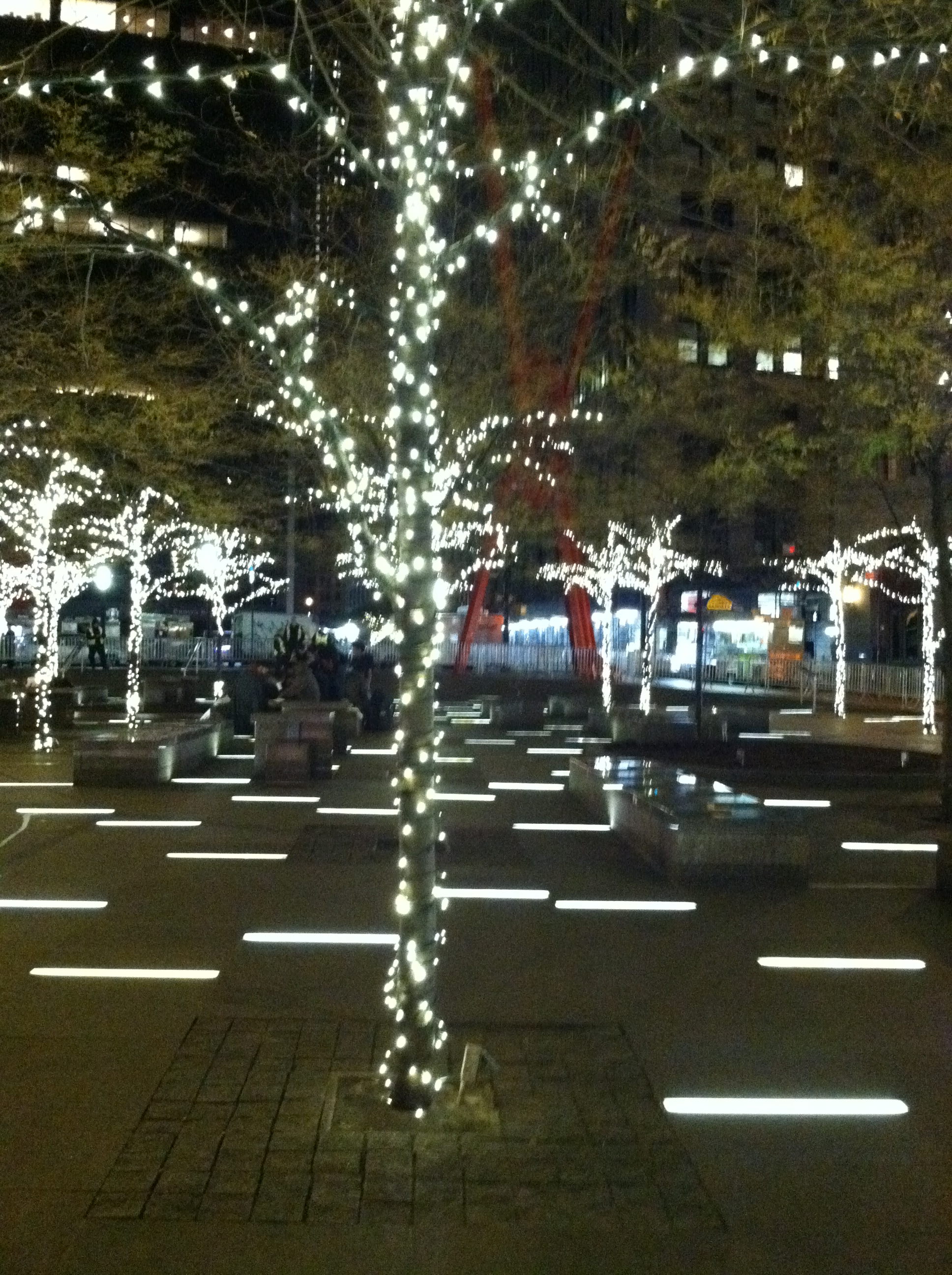
The night I went down to Zuccotti Park was relatively nondescript. There were barricades up and Police watching over everything and even the food trucks across the street were conducting business as usual. Noguchi’s sculpture at 140 Broadway looked just as home as ever and for all the muss and fuss, I finally got a chance to walk through the place and see firsthand what I had been missing. More importantly, it was at the end of a long shift that reminded me of all the others I had worked, serving as further proof of how little things had really changed.

Me – “Well, here we are Broadway and 10 St…right by that bend I told you about where the Church is. The Strand’s a block back.”

Dad – “Thank you. Keep the change (of a $20).”

Me – Thank you too and God Bless. Oh – and kid,you were right before when talking to your Mom. Watch out for those mamby-pamby’s – they could arise at any time and they sure don’t represent me of most of the other 99%, even if I’m not happy with where our country is heading.”

With that, I was off into the night, hoping to change things for the better one fare at a time.

Zuccotti Park looking towards the new World Trade Center