Way out West Side

The West Side as the edge of familiarity – courtesy of Saul Steinberg

“Hey there, where to?”

“11 Ave. and 30 St.”

“Oh, that’s where the Ohm Building is.”

“Yeah, how’d you know?”

“I’m a cabdriver, we should be on top of these things.”

“Well, that’s good to know.”

“Do you enjoy living there? I watched that go up and right now, that’s the only residential tower over in that neck of the woods.”

“Yeah, that’s about the one drawback of it. It’s still out in the middle of nowhere.”

“Well, I don’t expect that to last long. Once the extension of the 7 train opens late next year, all of that’s gonna change.”

“That’s true. I have to say though, July 4th was amazing. All of us who lived there were invited to the roof deck for a big party. They had a DJ up there with lots of food and we were also given the best view of the fireworks in the entire city. It was a wonderful experience.”

“I worked that night and I’ll take your word for it. The one time I walked into the lobby, they had dance music playing and lots of lights going like it was a club.”

“Haha. Yeah, it’s pretty happening in there. Most of the units are sold and people enjoy living in the Ohm, even if it’s off the beaten path.”

“Why do you like living there then?”

“It’s a lot cheaper than the other new towers that are being built and the walk isn’t really that much farther out than I thought it would be.”

“You’re talking about a place like the MiMA Tower, right?”

“Exactly. This was a much better deal.”

“What kind of work do ya do, if ya don’t mind me asking?”

“Oh, I’m a Lawyer…”

Five or ten years ago, this conversation would have been impossible to envision. It wasn’t just because I had a different occupation, but because no one would have lived this far out on the West Side of Manhattan. Since the rental market is still too big for its britches, Manhattan has been forced to look up, and out, for expansion. What’s ripe for the taking? Of course, that would be the West Side.

Horace T. Greeley was once quoted that one had to go West for prosperity but anyone who would have taken his advice was bound to see America as Saul Steinberg pictured it in the iconic March 29, 1976 New Yorker cover shown above. When the Dakota apartment tower was constructed, it was called that because people who considered moving there may has well have moved out past the 100th meridian. Central Park West is still considered one of the premier addresses to call home today but when it was first built, the Dakota was out in the middle of nowhere…

…which also happens to be the case of the Ohm Tower. These days, buildings need flashy names, big name designers, and a star marketing team to sell them. The MiMA Tower has posters on newsstands and the few remaining phone booths touting how it’s in the middle of so many neighborhoods, since most people are concerned with where and not what or how much it will set them back per month. Real estate, of course, is only about three things – location, location, and location. Given that I have to commute from the hinterlands of the above cartoon, it’s shocking to hear how many people in the Big Apple will confine themselves to a set of parameters. Living on 97 St as opposed to 94 St or two avenues over from where your coworkers go home to at night shouldn’t be a big deal but to some, it’s more of a status symbol than any promotion or corner office that they yearn for.

The West Side encompasses many diverse neighborhoods with divergent histories but one thing has united them through the recent decades of the city’s history, and that’s rail. The opening up of the Contract 1 IRT Line in 1904 opened up the Upper West Side to development of giant apartment houses along upper Broadway that still dominated the Upper West Side and Morningside Heights to this day. Of course, the line cuts east as it makes its way down to Columbus Circle and the line that defined the Middle and Lower West Sides was actually one that carried freight. 10 Ave. was known as “Death Ave.” due to the tracks being at grade but planners like Robert Moses had something better in mind, and that was grade separation.

North of midtown, the rail line was mostly covered up by what became Riverside Park with the railyards between 59 and 72 Street having become the site of Donald Trump’s massive Riverside South Development. The Freight Line that ran south from Penn Station ceased operations in 1980 and now, it has become one of the most successful urban rails-to-trails parks in the world. Of course, I’m referring to the High Line, which has remade the Lower West Side into a tourist and recreation mecca.

In between the two still stands the last gigantic undeveloped site in Manhattan and the future site of Hudson Yards. Coach has already signed on for a 50-story tower on 10 Ave, a stone’s throw from the Ohm, but the Related Companies has much larger ambitions for the open space where passenger trains are stored while not in use at Penn Station. Cabdrivers love the streets out there for runs since they are largely free of traffic and pedestrians unless the Lincoln Tunnel approaches are overflowing. I don’t tend to find a lot of fares out that way, since the Javits Center is still a giant black mark on the city in more ways than one. Of course, all of that would have changed in an alternative universe.

I say that because the London Olympics just concluded and as many news organizations recently reminded their readers, scores of officials wanted the 2012 Summer Games to be played in where else – New York. The Olympic Village may have been in Queens along with many of the facilities in Flushing Meadows but the grand center of the whole spectacle would have been on the West Side. What was once home to the Jets of the singing sort would have housed the Jets on the gridiron once the games were over and the mess was cleaned up. Residents were up in arms over the idea of a stadium taking up valuable real estate in an area starved for parks, schools, and other amenities that would have been much more utilized by the locals.

When I was growing up, one of my favorite songs was “West End Girls” by the Pet Shop Boys. It was an example of what I dubbed the “Third British Invasion” (which also included Depeche Mode, Erasure, and New Order) – sassier, full of synth, and more upbeat than the earlier work of U.K. sensations like the Beatles, the Rolling Stones, or Led Zeppelin. It had a chorus that referred to the differences between the posh West End of London and the gritty East End that was home to a long-running soap set there and later on, the Olympic Games that I mentioned above. Back in the 80’s, the island of Manhattan was the inverse of London’s layout with the West Side was just as gritty as the East End was. The Westies were losing their grip, the last remaining section of the Miller Highway stood unused until it’s untimely demolition in 1989, and rents there remained significantly lower than on the blocks that were crosstown.

Like all things and places old, it was resigned to two fates – oblivion or renewal. In the 21st Century, it’s obvious in which direction the neighborhood is heading in. In another 20 or 30 years, it may impossible to picture the blocks west of 8 Ave as once being the home of garages, warehouses, and blue-collar Manhattanites. Many of them are pushed so much further uptown or to the Outer Boroughs now as to render the neighborhood as a blank slate upon which to build anew. Although the architecture has been some of the most cutting-edge in the Big Apple, the exclusion of the much trumped-about 99% leaves much to be desired. Parks and open space can indeed be used by all but what made the neighborhood so colorful for so long was the cast of characters that called the place home. The increasing homogenization underneath all the crazy facades and glistening towers is not something that the City should be proud of. So much of Manhattan can already lay claim to housing residents with too much in common. The West Side has always been the proverbial cutting edge of New York and still deserves to be so, even as waves of change threaten to commodify so much of what made it unique in the first place.
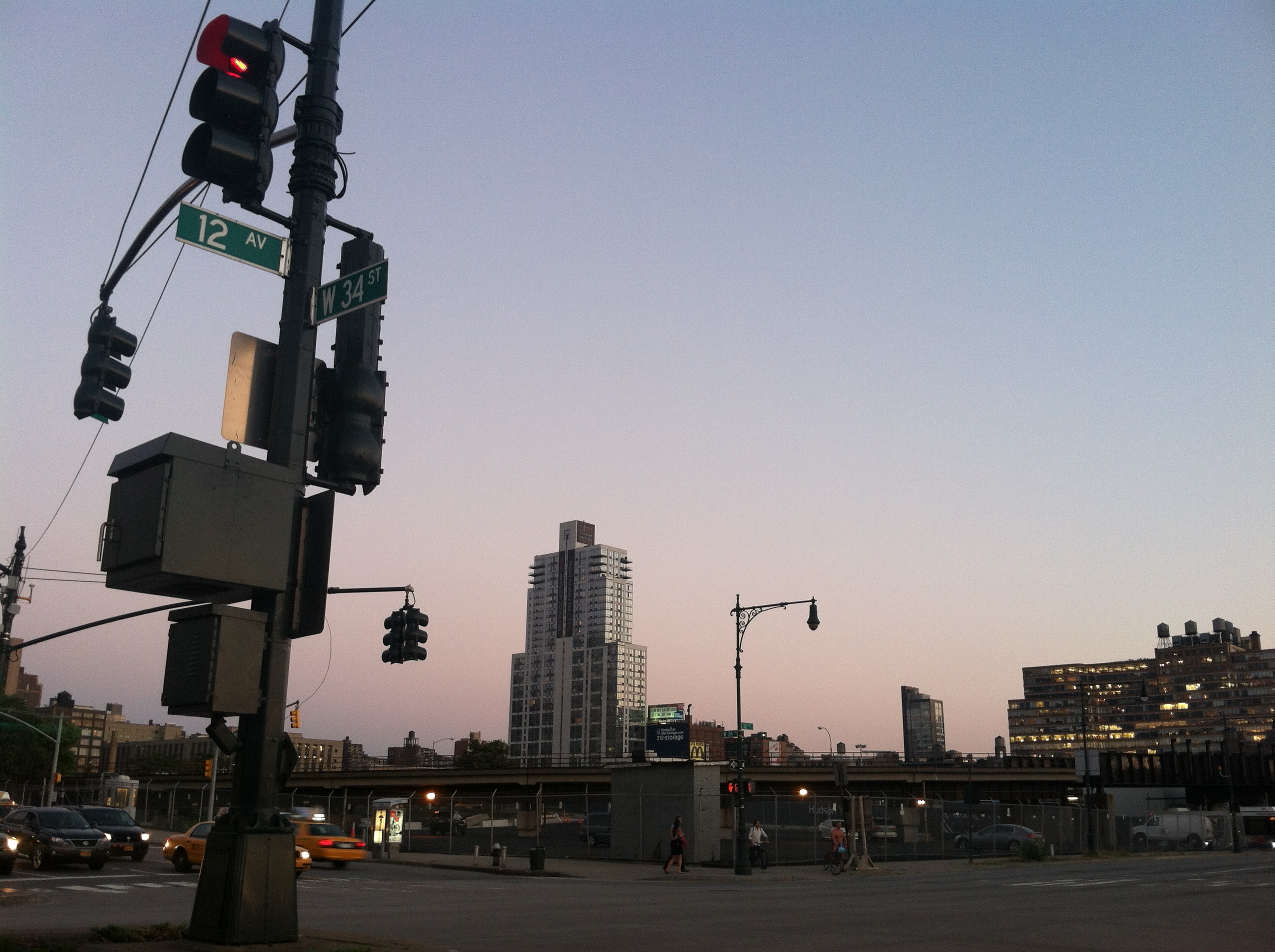
The Ohm and northernmost section of the High Line as seen from the West Side Highway

The Big App

Spotted on a phone left in my cab

It was reported last week that a new app is now out that helps passengers find empty cabs that are nearby and traveling under 10 MPH. Of course, it’s free for them download but a monthly fee for us and I’m taking a wild guess in saying that the developers expect us to recoup the cost by having enough extra fares. While this seems like a good idea, I’m not so sure if this is going to work as envisioned.

For starters, this wouldn’t ever be used by us at rush hour. Ever. Rush hour tends to be one big long fare broken up among many passengers. To be sure, I will get pulled out to the outer Boroughs now and then during peak periods but if I’m in Manhattan, it’s just one nonstop whirlwind. I have my spots where I know people are streaming out of work and eventually, that mass will work their way home or to where the social hotspots of the night happen to be. Scanning the paper and listening to my passengers is how I take the pulse of the city and once in a while, the other drivers I keep in touch with will inform me of any particular clubs or parties that are letting out and in short supply of Taxis.

Then there’s the issue of when to check our phones. Commissioner Yassky kindly reminded us in the article linked above to pull over when needing to do that but let’s face it, how many times have you seen one of us pull over, throw the flashers on, and check our text messages?

Exactly.

Hands-free devices are great for calls but there’s too many times where I have to actually pull up the screen on my phone to find out what I’m looking for. Thankfully, I have plenty of red lights to help me out with that but when cruising along, my focus is totally on what’s ahead of me and where my next fare is, since so many of them are so poor at getting noticed (hint: wave your phone when you hail – we can see them real easily!).

My bigger concern is the pace of life and how this would speed it up even more. The idea of using an app to find out where we are is great but if there’s one thing us cabdrivers know, it’s that the rules don’t apply during the lean periods. When the streets are bare, drivers will do *anything* to get a fare, and that sure includes breaking traffic laws and rules of common courtesy. The fare that’s half a block ahead at two in the morning might be someone else’s when he cuts across five lanes of traffic to claim it for himself and there’s no doubt that another cab could easily steal a fare that has already “claimed” you via the app. Eventually, someone will come up with a better mousetrap and the app in its planned form will become outdated like a Motorola phone. What would that make us?

A for-hire-vehicle, which wouldn’t be that much different than a black car…and you know how much us and them get along.

No, yellow cabs will never become black cars in a literal sense but there’s something to be said for having the exclusive right to take street hails. It’s the essence of who we are and what we do and like so many other jobs in the 21st Century, the definition of that line of work if being radically altered by mobile technology. Yes, I am guilty of that in a small way, not only because I love my iPhone but because I was actually interviewed by a company that’s currently developing something similar. It’s called Hailo and so far, it’s been a success in London. There isn’t a date yet for the Big Apple rollout will be but before that happens, yours truly will probably be involved in a test run on some way, shape, or form.

Given what I’ve said, that probably sounds hypocritical but I’m willing to give it a shot and put my own personal preferences aside. My opinions are strong but I refuse to pull a Quinn and force someone or something from being in New York without letting the people of the city decide for themselves if they want it. Ideas deserve a shot in the marketplace that is New York and even though the Taxi industry has been too slow to embrace change and technology, hopefully these new apps will make life easier for us and the riding public that we depend on every time we hit the streets.

Time Squared

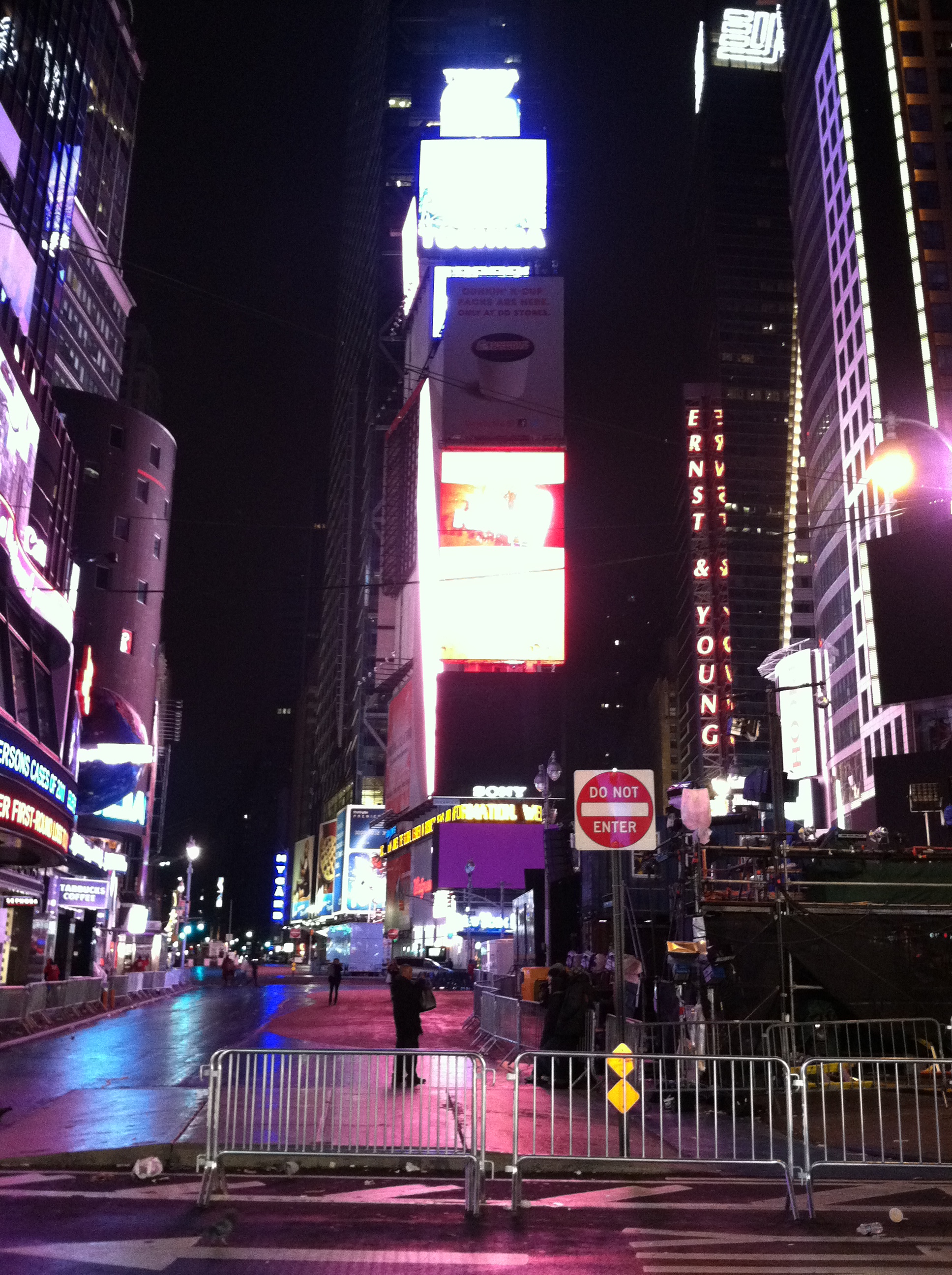
The calm before the storm on New Year’s Eve

“Hey there, where to?”

“Times Square. We want to see the Lego store, M & M World, and the Toys R Us there. Do you know where they are?”

“Of course I do, I’m a cabdriver.”

“Great. Our son’s never been to those before and he wants to see them.”

“Well, he’ll have lots of company. I can guarantee you that.”

There is probably not an part of the city that draws more people to it than the area around the convergence of Broadway and 7 Ave., more commonly known as Times Square. Named after the newspaper that was formerly headquartered in the building in the center of the above image, it has undergone more change than any other neighborhood in the city over the course of the 20th Century. When the original Times Building first opened, it was the tallest structure in the vicinity and nowhere near where the other newspapers were based since those were all clustered around City Hall. The IRT changed all of that by beginning the first waves of growth and dispersal of Manhattan’s population but what many don’t realize was that the original Times Square station was a local only stop and didn’t become an express station until the completion of the dual contracts station over a decade later.

Over the following years, the fortune of the neighborhood mirrored that of the City as a whole. Hotels and theaters popped up in the roaring 20’s, V-E and V-J days were celebrated by tens of thousands there during World War II, movie premieres on the east coast took place there in front of throngs of onlooking fans, and as white flight drained the city of vitality and tax revenue, few areas took a worse blow than the neighborhood that was built on performances that were staged indoors and spontaneous outdoors. All one has to do is watch Midnight Cowboy, Taxi Driver, or the opening scene of Shaft to see how far Times Square had fallen into disrepair. When I was growing up, it was something to avoid and I can still remember my Mom forcing me to look straight ahead as we walked back toward the Bus Terminal to head home.

It was around that time where the State and City moved in to take over many of the dilapidated properties and turn the area into a redevelopment zone. The first phase saw such projects as the Marriot Marquis, 750 7 Ave., and 1585 Broadway transform the northern half of the “bowtie” into a corporate canyon and the dot-com boom and growth of new media fueled the construction of the headquarters for Conde Nast and the North American base for Reuters,  among the new towers in the southern half of the Square. Even the New York Times got in on the act, as they moved out of their 43 St. offices and into a brand-new Renzo Piano skyscraper on 8 Ave. in the middle of the last decade. For all of the clamor to clean out the smut and restore it to it’s former glory, a funny thing happened once crime declined and families were able to trek through the area unscathed:

Some locals missed the old Times Square.

Times Towers (clockwise from upper left) –  Ernst & Young, Times Square Tower, Conde Nast, and Reuters

One of the great debates among New Yorkers now is whether they like the 24-hour three ring circus that the crossroads of the world has become. Many are nostalgic for the grime and grit that can no longer be found there. The three-card monte players are a thing of the past, Howard Johnson’s and Nathan’s  are no longer in the neighborhood, and the only women of ill repute can be found coming out of Lace and Flashdancers. Even the video arcades are long gone, as kids like the one who came into my cab last week now have commercials masquerading as stores to separate them from their money.

What New Yorkers complain about the most isn’t the three-dimensional reconstruction that took place over waves of economic booms, but the two-dimensional one whose tentacles have quietly overtaken the city during the great recession. Of course, I’m referring to the bike lanes and pedestrian plazas.

It’s not the first time the traffic flow has been altered on the streets of Times Square, as any pre-195o’s picture will attest to. It’s hard to imagine now but at one time, the avenues of New York had *two* way traffic. Think it’s bad on 5 Ave. now? Try having oncoming vehicles make a left turn as you cross a busy midtown intersection. In the mid 1950’s, the avenues were converted to one way and even today, I still groan when I have to take 3 Ave. in the East Village and have half of the vehicles in front of me attempt to make a left turn.

The new changes in the flow of people have riled so many because it’s the most visible example of the “us vs. them” battle that has emerged in recent years. Planners vs. users, Bloomberg vs. commonfolk, bicyclists vs. cars, locals vs. tourists. All of them have an agenda and as the neighborhood became more crowded throughout more of the day, space became more of a premium. As more buses hauled more tourists in and the pedicab industry grew, they had to compete with record volumes of traffic in a smaller amount of space, since Broadway was now cut off between 47 and 42 Streets. Locals may have opted for alternate ways to get around but as skyscraping hotels and flagship stores opened up, more people from out of town had more reasons to decamp in Times Square when visiting the Big Apple.

Because so many people eat, shop, and seek entertainment there, it’s only natural that the square is one of the moss-photographed sections of the city. Of course, it also means that I pass through it more than just about any other neighborhood during a typical shift. What was crowded early may thin out a few hours later and then crowd up again later in the night if a demonstration or roadwork clog up 7 Ave. during an off-peak time of the night. There are few other parts of the city where the difference of 20 or 30 minutes can be like night and day, even if the stars in the sky are perpetually blotted out by the bright lights of the signage. The turn restrictions and closing off of Broadway make Times Square nearly impossible to escape from during a jam and with so many people hailing cabs there throughout the night, keeping up with the traffic there is always a game that the driver can’t afford to lose.

The drama still takes place there as it has throughout much of the neighborhood’s history but like so much on TV today, it all seems scripted. The same tourists from the same parts of America will come and see the same Broadway plays that their parents saw or their kids will see in a movie theater. They’ll eat at the same chain restaurants and visit the same stores that they can find near a mall back home. Everyone will want his/her picture taken with the Naked Cowboy and the women who dresses up as the Statue of Liberty and they’ll spend their money on the street”artists” selling the same variations of 10 pictures and cheap t-shirts made overseas. They’ll even comment on the camera store that’s “Going out of Business”, just as it was 20 years ago.

Only the astute cabdriver will be fortunate enough to pass through the same streets and not have the same experience. The people in his cab will be from all corners of the globe, no two of them will want the same take on the homogenized experience as the last person who wanted to go there, and every passage through the Square will be different than the one before it, just as no two boards on Frogger are quite alike. A few sharp-eyed people will notice that the ball that’s dropped on New Year’s Eve is permanently on displayed on top of the old Times Tower, ready for it’s close-up on New Year’s. None of them will think that Groundhog Day (a la the Bill Murray movie) would be more appropriate to celebrate there, since the entire effect of Times Square is that of a shopping mall set in the urban fabric of New York. For a part of the city that many consider to be its heart, the Big Apple deserves more than the pacemaker that it ended up with after all the redevelopment.

No wonder they hate us – Times Square

Hold On

The start of my shift from the start of it all last July

Last week was not unlike many of the others that I’ve had lately. Lots of tourists from overseas flocked to the Big Apple and helped cabdrivers like yours truly out. There was a Taxi Worker’s Alliance meeting late at night to celebrate our hard-fought raise that goes into effect in the beginning of September. Someone on Friday night even stood in the middle of Broadway and stopped my cab, opening the shotgun door and demanding to go to the heart of the Lower East Side. Of course, my passenger in the back freaked out and I soon gave the drunkard a verbal tongue-lashing before he slammed the door and continued to make an ass out of himself with the other Taxis heading downtown. Once I brought my wheels back to the garage at around 6 yesterday morning, someone else happened: I hit the one-year mark as a New York City cabdriver.

Of course, there wasn’t any fanfare. My new hack license came in the mail two weeks ago and I filled out everything way ahead of time, to avoid the possibility of bureaucracy giving me an unplanned vacation in the middle of the summer. As I’ve alluded to earlier on here, one half of Taxi drivers don’t last a year and another half of them don’t make it to two years. When I started, I had no idea how long I was going to last because of circumstances that were beyond my control. I switched my major enough times during my two stints in college and the question that I’m asked most often as I navigate my way through the city streets is what I want to do with my life.

Besides strangling the necks of the passengers that get their jollies out of playing “20 questions” with me, I never have a definitive answer to that. 15 years ago, I would have said that I’d be an engineer. 10 years ago, I would have wanted to be an architect. 5 years ago, an economist. 3 years ago, an urban planner. Now, I just want survive this long enough to pay my student loans off. There have been too many articles lately stating that America is largely becoming a nation of dependents. Kids dependent on overbearing parents that don’t give them any room for creativity or free, unstructured time. Aging baby boomers dependent on younger generations to provide them with care. Migrants to this country dependent on the government to provide them with social services that will last until the grave comes calling and who can forget the jobless, looking in the mail every month until the unemployment checks come and tie them over for another few weeks.

I refuse to be a part of any of that. Sure, it’s not easy telling people what I do for a living, even when I’m imbibing during another social gathering with my fellow Columbia alums. It would be even harder for me to let go of my proverbial bootstraps and throw the towel in. One thing I have to remind my passengers is that I do *not* work for the garage that maintains and dispatches my vehicle. It’s a crude form of an independent business that myself, and the other drivers, run when we head out onto the streets and attempt to better our situation. Many of us sacrifice what’s important in order to drive and that would of course be free time.

There have been several weeks lately where I’ve spent more time in the Empire State than the Garden State and I don’t even work 7 days a week like many of my fellow drivers. One of my running jokes with my passengers is that they don’t step into my ride for the night but rather, into my office. I don’t have a desk but like so many who live on wheels, most of what I need to function comes with me every time I head out for a shift. I nearly lost it all last winter when someone at a high-end apartment building on the East Side took my bag out of my trunk along with the luggage of the passenger that I dropped off there. Thankfully, the doorman was first class and was able to find my information in my bag and contact me, saving me the time and expense of having to piece my vocational supplies back together again.

As much as people think I see X-rated acts and characters out of a Larry David series on a daily basis in the backseat, stories like the one above are much more commonplace for someone in my profession. The door on the side of the Taxi may as well be revolving since people come and go so quickly and as fast as the turnover of passengers is, so is the rate at which we go around the city. I’ll cover every corner of Manhattan and probably half a dozen neighborhoods in the outer Boroughs on a typical night and if someone forgets a phone or has to go back to where they originated from, the city will shrink down to nothing as I’m forced to fly my way across town to remedy the situation. Cities need to be seen on foot to be truly appreciated but in my line of work, the sights outside of the cab are secondary to the lives and interest stories that unfold inside of the vehicle. For the way that each fare begins as similarly to the one before it, the endings are just as varied as the people that live their lives inside of the city limits.

I wish I knew what the next year will bring. There will no doubt be more interesting people who will be fortunate enough to grace my presence after having come out of nowhere, unannounced. The economy will hopefully begin a real recovery once Europe gets its act together and we figure out who will be running America for the next four years. A real set of mayoral candidates should emerge from the sorry state of wannabes that are currently making waves on the airwaves and hopefully, the cranes that are beginning to dot the sky in midtown will make their way west and finally begin to transform Hudson Yards into it’s self-proclaimed “next great neighborhood”. I’m too nostalgic for the New York of my childhood which shaped the mindset that I have today, but only because the city hasn’t quite figured out what it wants to be tomorrow. Bike lanes, new neighborhoods in the outer Boroughs, a million freshly-planted trees, and a greener economy will only make a lasting mark if they are successfully used, loved, and integrated with the permanent cityscape that the likes of Moses, Olmsted, and Corbusier have left for us to preserve and improve upon. What my role will be in shaping the Big Apple of tomorrow remains unclear but for now, my job is simple and that is to help the people that live, work, and visit New York partake in the city and help shape it for the inhabitants of tomorrow.

One fare at a time, of course.

The blur of cabdriving

Storm the Bastille Day

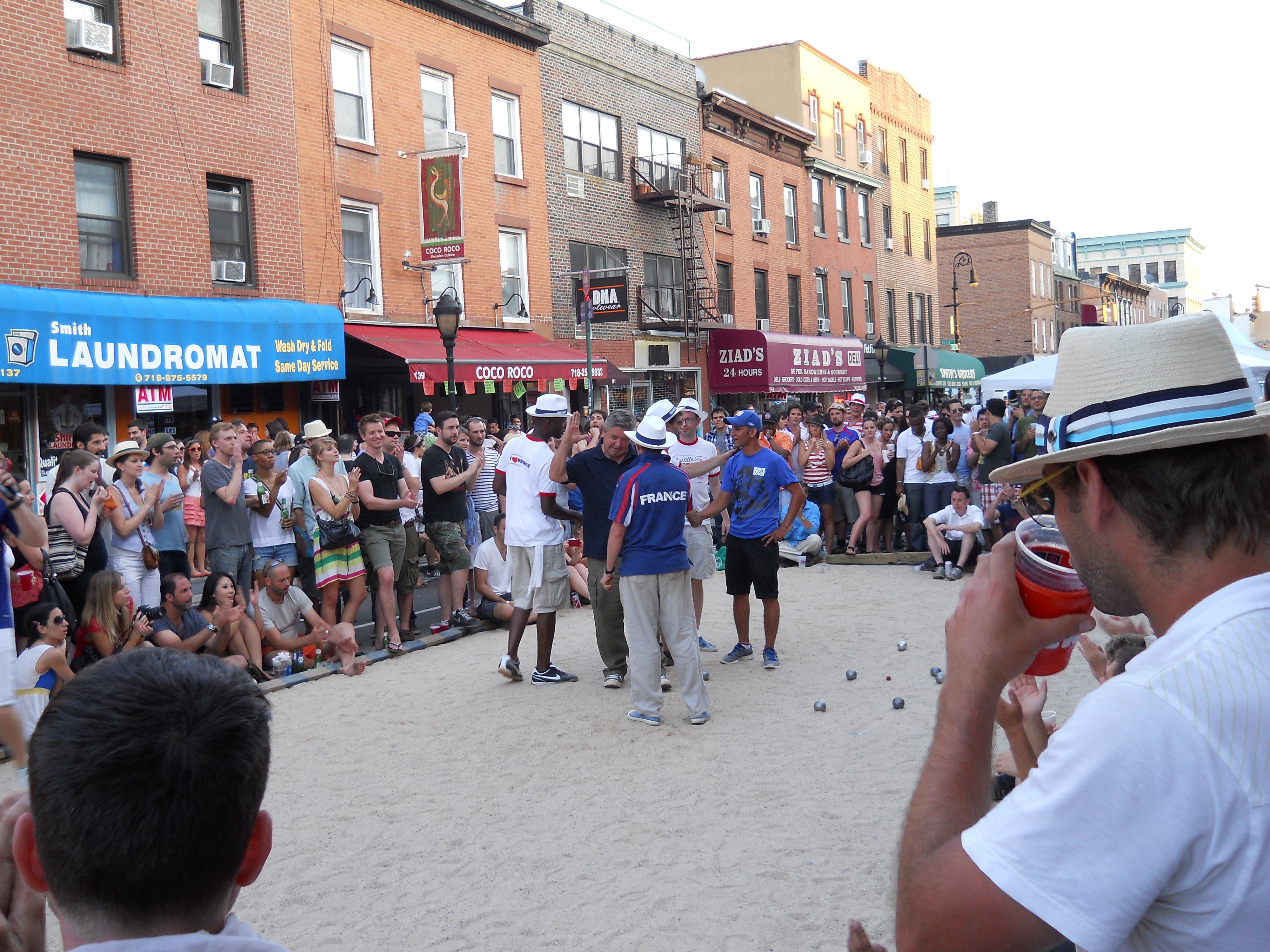
2011 Bastille Day Finale – Cobble Hill

“Do you hear a loud boom? I think I just heard another one.”

“I don’t hear anything. Oh wait, look at that!”

“It looks like fireworks coming from the Park.”

“I wonder why they’re shooting them off from Central Park.”

“Who knows? Maybe it’s for Bastille Day.”

Sure enough, it was fireworks coming from the direction of the Sheep Meadow. After I dropped off this passenger, I soon found out from my next fare that the Philharmonic was playing in the park that night and as an attempt to draw more patrons in, a post-concert pyrotechnics display concluded the night’s festivities. Although it paled in comparison to the show that Macy’s put on two weeks earlier, it was certainly enough to get my attention as well as everyone else’s who happened to be shooting crosstown on 57 St.

With so much going on in the Big Apple, I incorrectly guessed the reason for the visual and aural display. Every week, there’s another parade, festival, or commemoration for a person, anniversary, or country and one of the perks of working in the Big Apple is that every nation on Earth gets its moment in the sun at least once a year. It may be overkill at times and a pain when major streets in the city get blocked off, but they all serve as reminders that we’re a nation of immigrants that came here in search of a better life.

Obviously, I was off the mark in the conversation above and it shouldn’t come as any surprise as I’ll admit that I’m not the least bit French. Not by birth, not by association, and certainly not by marriage. While I do have a craving for Brie and Moet, those are not the types of food and drink that I tend to imbibe on and I can’t speak a word of the language, even though French is similar to the Latin that kept me up many a night in Butler Library. With this in mind, I write today in celebration of the one French custom that has helped me through many an off day and night that has dragged on for far longer than a typical shift:

Petanque.

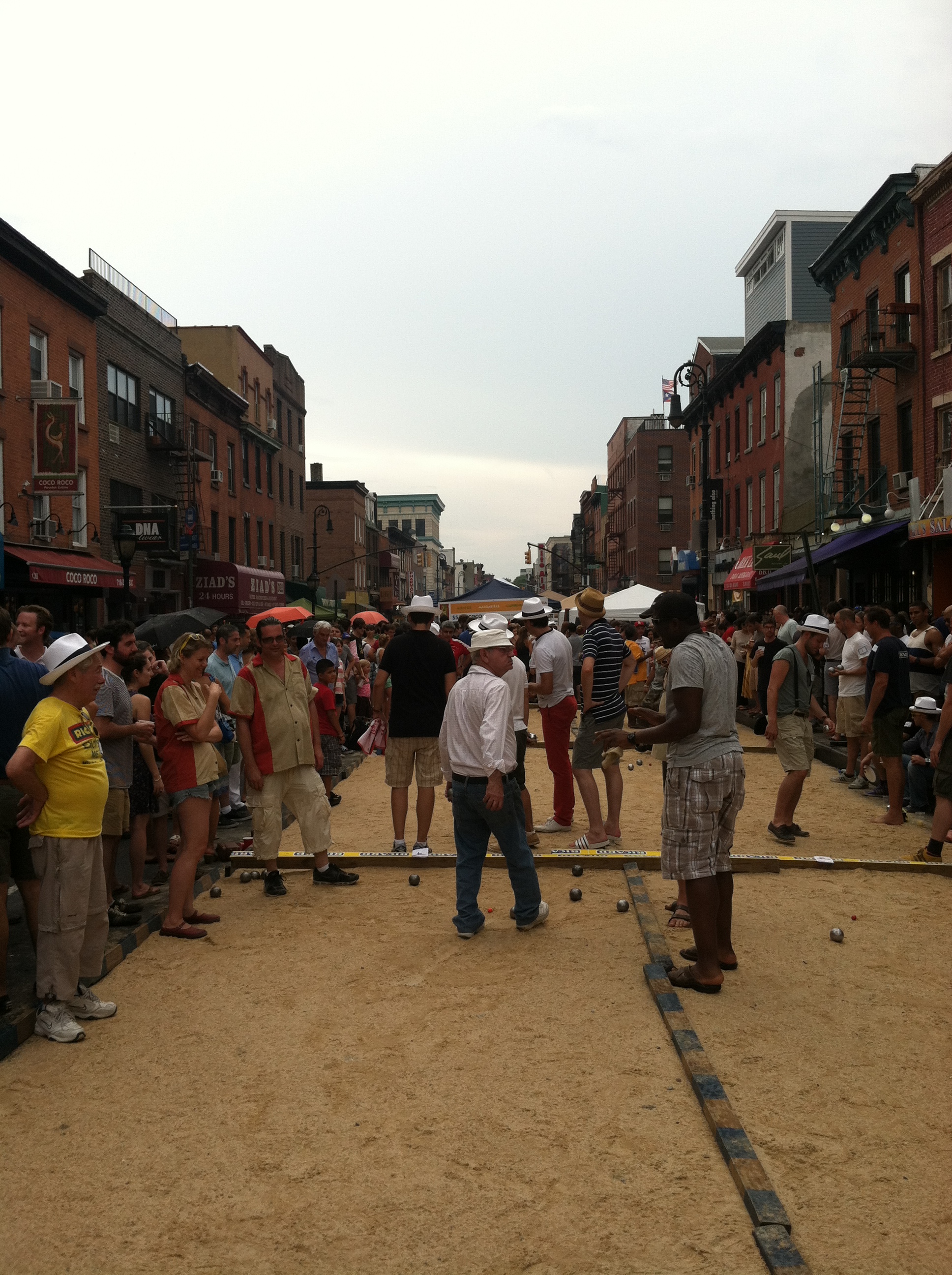
Loosely translated, it means “feet grounded” and is a game similar to bocce; except that it’s not. I only started playing two years ago and like so many others in New York that take up a sport as a form of recreation, I picked it up off of the street…er, park.

Bryant Park, that is.

Long before I stopped cursing at Yellow cabs and actually drove one for a living, I passed through Bryant Park. I didn’t recall what it was like in the 1980’s since like Times Square, it was an area to be avoided at all costs. However, the 1992 renovation brought new life to the space and the inclusion of a reading room, public restroom, and great lawn made the place ideal for passing through at all times of the day. Every time I left the Bus Terminal, I passed through it to reach most of Midtown; even if I had to go a little bit out of my way. Over the years, it became the start of many of my pavement-pounding days and it eventually became the nexus of my outdoor time in New York. The grid that had defined the street layout in New York was continued inside the park, as the rows of trees, pathways, and a centrally-placed fountain brought out the best in French landscape architecture, while allowing for lots of fauna to fill in the spaces and throw in just a hint of disorder to the regimented layout.

Of course, what would suit a place like this better than a game that was French in origin?

The few times I saw players partaking in it, they were old and looked like the bowlers that were in my leagues back in the day here in Jersey. For years, I was called “kid” every time I burned the other team or made 6 spares in a row and that’s how I felt here, watching the seasoned veterans battle each other out boule after boule. Like so much in life, I decided to give it a go one day, when the sun was shining bright and I didn’t have the weight of the academic world at Columbia weighing me down anymore. I walked over, signed up for a free lesson, and started tossing the metal balls at the jack one at a time, when it was my turn.

As as they say, the rest was history.

Like so much in life, it quietly grew on me. One session turned into a few weekly practices and eventually, I joined LBNY. For someone who didn’t have a home in New York until I drove one figuratively on wheels, the game gave me a reprieve from the City that turned out to be one of cold shoulders, instead of big ones. To be fair, many of the players were French and had the game ingrained in their blood but over time, I found out that the diversity of the players was as great as the city itself. Young, old, working, retired, near, and far – it didn’t make a difference. The game quickly became greater than the sum of its parts players and soon enough, I found myself with boules in tow going around the city for a bunch of tournaments.

None of which was greater than those clustered around Bastille Day.

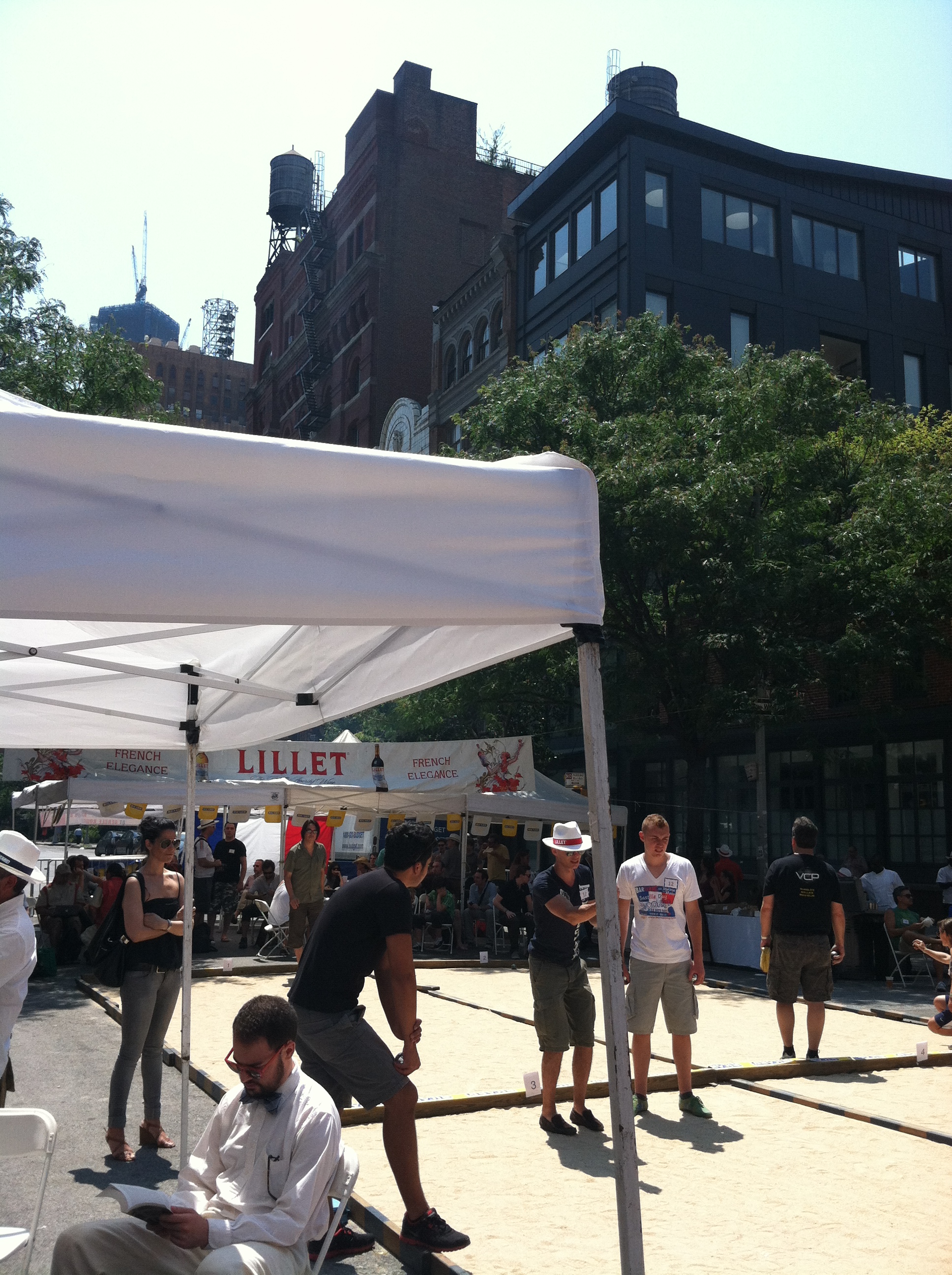
Bastille Day Tournament – TriBeCa

My textbooks at school taught me that the Bastille was a French prison that was stormed in 1789 and set off the waves of revolutions that led to the modern-day republic. The tournaments I attended did have a guillotine for display purposes but focused more on modern culture and French-inspired jazz that has been overlooked in this country. To be fair, I knew that I was a neophyte at the game and a majority of the players who excelled at it spoke French and exhibited the customs of it during the games.

Sure enough, that rubbed off on me too.

For all of its similarities to lawn bowling, Petanque is indeed an egalitarian game. What’s in? What’s out? You moved! I did not. My boule is closer! Oh yeah?

Just like cabdriving, it’s a mindset that seemed so alien to me until I played competitively and started to act like everyone else. New York excels at taking people from all corners of the globe and making them assimilate with their peers, if they choose not to self-segregate and not selectively associate with others of their own race or background. Since I grew up in such a homogenous place, it was easy for me to adapt to my surroundings when I left here, since I never really had a tie to where I came from. It’s probably why I’ve always liked seeing new neighborhoods and places when I was on wheels, even though I stuck out like a sore thumb quite often.

Last week was the one where all of this year’s Bastille Tournaments took place and of course, I hung up my keys for a few days and reacquainted myself with tossing the boules on sand. I said “fromage”, puckered up for some Ricard, and to be fair, did my fair share of arguing and belting out our point total in French after enough hard-fought rounds. It was hard to believe that I was on streets that I had passed through time and time again after dropping fares off, only because I was on the other end of the street closings that harden both the urban and my physical arteries when the days get long. No matter – there weren’t any trophies in it for me this year but once the games were over, any animosity I felt towards any players went by the wayside and my next shift at work was just that much easier to handle once I pulled out of the garage.

Bastille Day Tournament – Cobble Hill

Speaking of that, I certainly had a night to remember after dragging my burnt and parched body home from Smith Street last week. The hot weather lent itself to a lot of short fares since most people were too drained to walk more than a few blocks. After a pile of runs on the West Side, I took a family from Columbus Circle over to Central Park. Then, another person had to go uptown to the Park since her previous cabdriver didn’t know what he was doing. My next fare turned out to be a couple going their separate ways and after I dropped off the wife, I turned around to ask the gentleman where he was going:

“Where to?”

“53 W 35 St.”

“Oh, that’s right by Macy’s. We’ll stay on Lex and take it down unless the traffic slows down too much by the hotels.”

“Sounds good.”

Sure enough it did, considering that those words came from Al Roker’s mouth.

After dropping off the Today show weatherman, I had a few more fares and loops around midtown before making a left turn into Times Square and braving the downtown traffic. A couple that looked inebriated stuck their hands out and naturally, I took them:

“Hey there, where to?”

“Going home to Chelsea. 7 Ave. between 24 and 25 St.”

“Sure thing, I think that’s the building with the Whole Foods in it. Looks like you two had a good time tonight.”

“We did and you know what? Bloomberg didn’t have to tell us how much to drink. Can you believe he’s trying to regulate soda here in the city now?”

“I believe it even though I don’t agree with it.”

“Well, fuck that. You know what happened when they tried that with alcohol?”

“Yeah, prohibition. It didn’t work out too well.”

“Exactly! Well, unless you were the mafia. They’ll love it if this goes through too.”

“Of course.”

Yeah, the husband was slammed and a few minutes later, made a fairly typical request:

“I need to stop at a liquor store. Pull around to the one on 8 Ave. and wait for me there.”

“Alrighty, the meter will be on while you’re in there but I can wait.”

“Do you want anything?”

“Me? Um, well…I like my Bombay Sapphire or Saint Germain.”

“Okay.”

I waited and the next thing I knew…:

“Aaugh!”

“I didn’t mean to startle you. Seriously, I didn’t. I’m sorry, I’m sorry, I’m so fucking sorry!”

“It’s ok miss, it’s not every day that someone puts her head through the partition and has her hair up against my arm.”

“Pat, please. I just wanted to say hi.”

“Hi.”

“I never see the front of a cab.”

“Well, you have.”

“I”m just so fucking drunk right now and you’re so nice.”

“It’s alright – hey, what the…”

Fittingly, this was dropped through the shotgun window of my Taxi:

No wrapping required

“We’re right around the corner in the building where Katie Holmes is stuck in but don’t worry. We’re not scientologists and we’re entering through the side door.”

Laissez les bons temps rouler.

Life Underground

A typical week on the Subway in New York

“Hey there, where to?”

“Orchard and Rivington, on the Lower East Side.”

“It might take a while, there’s quite a bit of traffic. Someone got pushed onto the L train tracks.”

“Well, that’s not going to mess things up on a Saturday night, is it?”

“Nope, it’s just you and half the city trying to get across the Willy B. at this hour.”

You might find it unusual that a Taxi driver would want to think about, let alone write, an entry about an alternative form of transportation in New York. I find it odd that I’ve gone this long and haven’t elaborated on the real lifeblood of the Big Apple. For all the ranting and raving that I do about my job, there’s no doubt that the trains that run under (and over) the streets of the city are just worthy of my attention. The two forms of transit have an intertwined existence that most people don’t know about up front, but becomes more readily apparent when looked at underneath the surface.

First off, there’s the state surcharge that gets tacked onto every fare. Heading anywhere in the 5 Boroughs or surrounding New York Counties? You’re paying 5o cents extra to the MTA. It’s a subsidy that the (mostly) richer Taxi passengers pay to help those who have to take public transportation and it continues the tradition set up in 1968 when the Triborough Bridge Authority was absorbed into the region’s crumbling mass transit system. It marked the end of Robert Moses’s rule as head of various city and state transportation, housing, and parks agencies but more importantly, it set the stage for the rebuilding of the region’s infrastructure and the return of its economic competitiveness. Even though most cabdrivers prefer to take free crossings over those with a toll, there’s no doubt that the MTA Bridges and Tunnels today are the ones that are maintained the best in New York. Many older drivers will probably wince in pain at the thought of the lower East River crossings being completely shut down for emergency repairs but such was the case in the late 1980’s when there were proposals to tear down the Williamsburg Bridge in favor of a more modern cable-stayed span. Fortunately, the turn-of-the-century crossings were kept at the expense of years of repairs and closed lanes. Yes, the MTA crossings are newer but the work has been kept up on them over the years and there’s never been any talk of a new span replacing the Triborough or Verrazano Bridges.

Then there’s the hole in the ground on the Upper East Side and by that, I’m referring to the Second Ave. Subway. It’s the most ambitious public works project in New York in generations and promises to revolutionize transportation and Real Estate values across large swaths of Manhattan. Whether it will or not remains to be seen but as in so many other instances, the project is behind schedule and over budget. Even if I didn’t know or care a damn about the tubes being bored up to 96 St., it would be impossible to dismiss since the chaos that it has caused on the neighborhood is unavoidable. I’ve had enough fares specifically request not to cross or go down 2 Ave. in spots and there have been countless stories written about the disruptions to residents along the future route and the businesses that have barely made ends meet due to the decreased foot traffic. Yes, a completed transit line would result in less Taxi fares in the area and better air quality but the inconveniences in the meantime have made many feel that the construction is not worth the long-term benefits to the neighborhood and City at large.

No discussion of the Subway would be complete without mentioning the Transport Workers Union. Arguably the most powerful in the city, they brought the region to its knees twice – once in 1966, again in 1980, and 25 years later in a strike that defied legalistic orders. In every case, the finger-pointing got nasty as both sides accused the other of not acting in good faith. The labor dispute in the Lindsay Administration has been cited as the cause of Union President Mike Quill’s untimely demise but it was enough to push a City that had a skyrocketing crime rate and lowering quality-of-life over the edge. Yes, there were not blackouts or garbage strikes in the later labor impasse’s but when the trains and buses weren’t running, it reflected poorly on all levels of Government to properly serve the people of New York.

Time and time again in recent months, I have been asked about the proposed fare hikes and rate increases for the yellow cabs of New York. Many people are shocked to find out that drivers such as myself are not part of a union, do not receive overtime when we surpass 40 hours in a week, and do not pay into a 401(k) or health insurance program. For the majority of us, we do this job for the money and the chance of steady work and if we love what we do, that’s just an intangible bonus. It is so difficult to feel sympathy for bus and train operators that can retire with a full pension and are nearly untouchable when it comes to passenger complaints and grievances. I am NOT talking about those who have been assaulted but rather, those who have had valid complaints brought against them by a riding public tired of fare hikes, service cuts, and rude employees. When it comes to our job, we do not have the luxury of a Union to protect us and a pension system to help us out of problems that may arise. Should we have to go to Taxi court down on Beaver Street, odds are we will lose, even if the problem brought into question is not our fault. To be a cabdriver in New York is to truly stake out on your own, in a legal as well as an occupational sense.

When I drive passengers around the City, I admit that I do not know all the streets, restaurants, and landmarks. I do my best to learn them all as well as the fastest way to get around. Much of what I accumulated in knowledge over the years was not because I was a local, as I have never truly called any neighborhood in the Big Apple home. Rather, it was because I took the Subway to as many places as I humanly could. Because New York’s system is so extensive and transfer-friendly, it was relatively easy to plunk down change for a token and take off for a neighborhood that was begging to be explored. I even went so far as to ride the entire system on one fare when the original Contract 1 Line turned 100 back in 2004. For someone in their late teens exploring a place that was just pulling out of the dark days of the 70’s and 80’s, the Subway was an outlet to much of the city that was otherwise inaccessible on the cheap.

So as the price of a typical Taxi fare appears to be on the rise for the first time in years, I tell many of my passengers that the rise in price of a ride on a MTA Bus or Subway has gone up numerous times in the last decade. The next hike appears to be in January followed by one two years after that, since it’s now pegged to the inflation rate. That too will affect us, as future operating deficits many have to be partially covered by increased revenue from the Taxi industry; which will include every driver in the City. It’s a shell game that will eventually screw someone in the end, since there are so many laborers in the transportation field and so much revenue for the pigs to raid in the trough of revenue via future fares.

In the poster above, a typical week’s worth of service diversions are shown in all their complicated glory. I make it a point to remember the ones that will affect me – in both my commute to and from work and the neighborhoods that I most frequent during a typical shift. There’s been plenty of times where I’ve found people who needed to go home late at night but the train that would normally take them there was either not running or rerouted. Whether drivers will ever admit it or not, all forms of transportation in New York are affected by how the others are running, if they’re even operating at all. For those of us that realize that and keep up with the changes, it’s more money in our pockets at the end of the night. More importantly, it’s a realization that so many people in the Big Apple are depending upon the riding public for their livelihoods, in a time where not many other fields are guaranteed steady demand for their services. All of us who drive are in this together, whether we’d like to admit it or not.

Colored bullets over Broadway

Let Freedom (Tower) Ring

Rendering of the new WTC – looking northeast

“Hey there, where to?”

“The 4 of us are going down to Bay Ridge.”

“No problem. Want me to take the Battery Tunnel?”

“That’s fine. We don’t mind paying the toll.”

“I’m gonna take the West Side Highway down, traffic should be good.”

Sure enough, we wove our way through the stilettos and roadwork of the Meatpacking District before flying down the Hudson as the sun descended to the west.

“Wow, is that the Freedom Tower? It looks great.”

“Sure enough, it is. It was topped out a few weeks ago and should be open sometime next year.”

“Wasn’t that supposed to be the World’s Tallest Building?”

“When they first planned it, yes. 1,776 feet isn’t anywhere close to what’s going up in Asia but it will be the tallest building in the Western Hemisphere when it’s completed.”

“I see. Are they putting up an identical one next to it?”

10 years after 9/11, there’s little doubt that the concept of a pair still rings true in Lower Manhattan, even if what’s going up now hardly resembles what once stood on those hallowed 16 acres.

With the possible exception of the Second Ave Subway, there’s currently nothing under construction in the Big Apple that has captivated and polarized so many New Yorkers as the army of cranes hard at work down at Ground Zero. In the midst of economic imbalance that has New Yorkers working harder than ever to pay rents that are at an all-time high, the sight of Lower Manhattan’s skyline returning to prominence has many optimistic about the future of Lower Manhattan and the office market as a whole.

The old saying that time heals all wounds might not hold more than at the site where the Twin Towers once stood. Shortly after the terrorist attacks that brought the original World Trade Center down, many thought that skyscrapers such at those were a 20th century relic and that the whole 16-acre site should be turned into a memorial for the thousands that perished that day. Rebuilding seemed so far off given the 1.25 million tons of debris that had to be cleared away, the human remains that had to be sorted out and cataloged, and the recession that nation was plunged into around the time of the attacks. Tall buildings were seen as the ultimate sign of hubris and arrogance, and who could forget the sight of innocent office workers leaping to their deaths, unable to reach lower stories and setbacks in a structure that was the epitome of modernism gone cold and impersonal?

If time is the ultimate judge of historical events, the act of War that took place on that September day turned out to not be as bad as was first thought. The thousands that were thought to have their lives ended in the towers was reduced down to 3,000 as more peoples whereabouts became available.  Even though the stock market had a few rough sessions, there wasn’t a second coming of the great depression as a result of the attacks. Additionally, the cleanup defied the odds, as it became the only major construction project in modern Big Apple lore to be completed on time and under budget, as the last steel beam from the foundation was removed in March of the following year. All of positives after that were nowhere to be found, as the real problems arose and lingered for years.

There still isn’t a site in the city limits where so many agencies and egos clash on such a massive scale. The Original World Trade Center was a pet project of David and Nelson Rockefeller (some even gave the towers those nicknames) to help revitalize Lower Manhattan. In the postwar years, Midtown was taking over as the economic and business heart of the city. Newer Towers, a more efficient street layout, and easier access from much of the Metropolitan area allowed new office corridors to spring up on 3, Park, and 6 Aves. While the design of the towers left much to be desired, the resulting corporate canyons resulted in a fundamental shift of the city’s economy from manufacturing to the late 20th century buzzword of FIRE (financial, insurance, and real estate) as well as the competition it gave to the Financial District. The Chase Manhattan Tower of 1960 brought an end to the wedding-cake/ziggurat towers that helped romanticize Lower Manhattan’s skyline but it was a harbinger of things to come. By the time of the late 1960’s, the dominoes had already been set in motion.

Enter the Port Authority. Originally created in the 1920’s as an agency to build a freight rail tunnel under the Hudson/Narrows (still not fulfilled to this day), the agency did create a series of spectacular river crossings and port improvements that added to the region’s mobility and economy. They were also the operators of the Hudson and Manhattan tubes, later rechristened as the PATH system. Sure enough, the Lower Manhattan terminus for the line was where else, at Hudson Terminal…which later became the site for the World Trade Center.

Like the United Nations, Lincoln Center, and so many housing complexes around the city, Urban Redevelopment and Eminent Domain were the final piece of the puzzles for the 16-acre Superblock imposed on Lower Manhattan. The old Hudson and Manhattan Terminal, the Syrian Quarter, and Radio Row, along with the streets that ran through the site, were obliterated in order to make way for the 7 Towers and the Vista Hotel that eventually took their place. Minoru Yamasaki’s plan was grand on a scale that nothing in New York had ever seen and it was tragic that like his Pruitt-Igoe complex in Saint Louis, they did not stand the test of time. Although their demises were the result of a different set of circumstances, the imagery of modern architecture failing to accomplish the goal of the betterment of humanity through an international style held sway.

Flash forward to the 21st Century and what we have for the site that formerly housed the Twin Towers called home can be seen above. Even with all the decades and two terrorist attacks since the sites original inception, there are a ton of similarities between the first and current World Trade Center projects. Big tenants will call the site home – Conde Nast has agreed to take space in 1 WTC while Cantor Fitzgerald and Port Authority were the companies that suffered the biggest losses on 9/11. Daniel Libeskind and David Childs were the architects most responsible for the master plan down at Ground Zero and should the site be fully developed, Santiago Calatrava, Richard Rogers, and Lord Norman Foster will be those who leave their imprint on Lower Manhattan. The Rockefellers and the Port Authority will be joined by the victims families, Larry Silverstein, and the Lower Manhattan Development Corporation as the sides vying for influence over what will ultimately be constructed in Lower Manhattan as well. With so many big shoulders and egos vying for influence in the reconstruction process, it should come as no surprise that the National September 11th Museum, the new PATH terminal, and two of the four major skyscrapers have yet to come to fruition, nearly 11 years after the attacks. The original World Trade Center was complete by 1973, with the exception of the Vista Hotel and 7 WTC Building which were started later and not complete until the 1980’s.

For now, 1 and 4 WTC are like so many other construction projects around New York. They make for interesting conversations between my passengers and I but most New Yorkers don’t think twice and about the larger ramifications of what’s being built around them. I need to admit to myself that people don’t give a second thought to that design of the built environment around them but they need to think about the bigger questions: What do I want to go up where the World Trade Center was? Why aren’t the families of the victims able to go to a museum that commemorates one of the darkest days in American History? Why is the Port Authority allowed to jack up tolls and fees that everyone will ultimately pay for, to cover a project that’s billions over budget and years behind schedule? Do companies need subsidies and tax breaks to move to Lower Manhattan when millions in the city aren’t receiving help for rent and food?

I was not in New York on 9/11 and would have been there the day before on my 25th Birthday, had it not downpoured the entire day. In the days and months after the attack, I read so much on what went into the creation, and ultimately, the destruction, of the World Trade Center. The timeline, sequence of events, and the players involved were each worthy of a story of their own, but when combined, served to write one of the most complex and tragic tales of modern New York. As I see the lights of 1 WTC on each night as I make my way around the city, I can’t help but think that the parties involved and the families who lost loved ones deserve a better narrative than the one that’s being poorly constructed all these years later. For all the glass and glitz being shown to the world, New Yorkers deserve at least a full audit of the finances of all the parties involved in the rebuilding currently taking place.

Anything less would be a slap in the face for those still hurting from the attacks, even after all of this time.

A view down Fulton Street of a red, white, and blue 1 WTC under construction

Sliding Doors

Mind the gap!

“So where do you go when you’re driving this? I”m guessing Manhattan.”

“Well yes, that’s where I spend a majority of my time. Of course, I go wherever my passengers ask me to take them.”

“Which is anywhere in the 5 Boroughs, right?”

“Correct.”

“And you can pick up anywhere in New York as well, right?”

“Correct, that’s what yellow means – licensed to take street hails anywhere in the City of New York.”

“Unlike the Livery Cabs (black cars).”

“That’s also correct, but you don’t want to get me started on them.”

I’ll admit, I don’t go to the movies. Ever. I can’t remember the last time I plopped down $10 of my hard-earned money in order to have the pleasure of sitting in a dark room with sticky floors, random cellphone conversations, and unruly kids. I don’t get a lot of free time during the week and when I do, I tend to be a bit more interactive with the forms of entertainment that I enjoy.

However, I *did* see the movie that is also the title of this posting. Most of you are unaware that I attended Vanderbilt University in the late 90’s before I was unceremoniously asked to leave for academic reasons. During my 3 years in the buckle of the Bible belt, I struggled with many facets of my life, including my studies, my social life, my identity, and dating. On one of the few occasions that I headed off-campus with someone  I was interested in, we went to the movies and of course, the feature we ended up seeing was Sliding Doors.

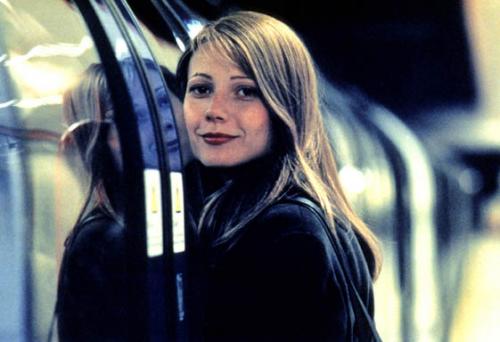
The premise was simple – Gwyneth Paltrow plays a young Londoner who got fired from her job and had to take the Tube home afterward. The plot splits in two as she made the train in one scene and when it was replayed, she ended up missing it. The concept of a parallel universe came to life as the rest of the film alternated back and forth between the two tales that result from the incident in London’s underground. What started of as an incident that millions of urbanites endure on a daily basis reverberated throughout her life, affecting her image, love life, and vocation following her termination of employment.

The film itself was interesting and came out at the height of Paltrow’s Shakespeare in Love-induced popularity. While I can’t remember every detail about the movie or the person I was with that day, the idea behind the plot stuck with me. Every day, there are tons of decisions and services that rely on a set schedule that I use to traverse the Big Apple and surrounds. Most of these run like clockwork but in an imperfect world, obstructions and unplanned events always seem to throw a monkey wrench into the best of my intentions.

Then of course, there’s my work environment. From the moment I pull out of the garage and start my shift, there are big decisions to be made. Car Wash? If so, now or later? Queensboro or Willy B. to enter Manhattan? Uptown? Downtown? Should I just follow the traffic and not fight it? Many people think that drivers such as myself have a set pattern that I follow to start my day out but more than any other job that I’ve had, this vocation quickly puts to death the notion of monotony and normalcy.

The conversation that I penned above is one that I have quite often. As I’ve mentioned before, passengers love to ask me questions once they realize that I’m not typical and the ones dealing with where I go when I’m available is one that comes up often. Each day has a different pattern when it comes to human and vehicular traffic. If every person and form of transportation could be tracked, I’m sure that it would be easy to see where everyone went after work, and how the social life in the City proceeds on a given night. In an ideal world, all the cabs would start off in Midtown or Downtown and eventually work their way to the residential and cultural areas before heading to the trendy neighborhoods that people eat, drink, and socialize in.

Of course, that’s much easier said than done. Nights don’t progress linearly like that. Where my first fare takes me determines where I go pick up my second one, and that one has a hand in determining where my third one will be found, and so on. Since I average 30 fares in a 12-hour span, it’s easy to envision how the beginning of my shift can determine where I’ll end up physically and financially at the end of the night.

Last week, the traffic was some of the worst I had seen since Christmas. 20 minutes and change to cross the Willy B, only to have my first fare hop into my cab and send me back across the bridge to Williamsburg. I had a feeling that I was going to a less-than-desirable locale during the rush, given that the cab in front of me sped away from the couple when they told him where to go. Sure enough, I cut through the narrow grid of lanes that the Lower East Side consists of and 10 minutes later, I dropped them off.

The beauty of all of this was that my next fare was only a block away and wanted to go to the Upper East Side. At that hour, the Queensboro Bridge was starting to free up and since I had very little turnover time and traffic to impede me, I brought my two passengers and their bags up to 1 Ave in decent time. Within an hour, I was flipping my fares over relatively easily and on my way to a solid weekday night.

So many times, I’ve had to take someone that I despise. Too many people have zero patience during the time of day where many of the arteries of the city are clogged up. Now that I’m pushing a year of doing this job, I let most of it slide off but I have to constantly remind myself that everything evens out in the end. For every bad fare or passenger that has absolutely ZERO idea where he or she is going, somebody will come along later in the night to make up for it. What always amazes me is that I hated having the person early on that added to the Hell of Rush Hour but without that first or second domino being pushed, the ride that made me laugh, smile, and think at 2 in the morning would never have fallen into place.

Even when I don’t have someone, there are always decisions to be made that have ramifications. Touching down on Delancey Street from the Willy B brings a plethora of choices when it comes to where to turn. A majority of the vehicles will be headed crosstown to the Holland Tunnel so my objective is to move away, and toward a street without any empty Taxis on it. This is how I work for much of the night – separating myself out from the pack. More often that I first would have guessed at, marching to my own beat has resulted in finding a fare that was so close, and yet so far from the nearest available Taxi. Waiting in line has its benefits late at night but for the most part, avoiding the lemmings pays off in the end.

People think that my job is easy, since Manhattan is just “one big grid” and most of the streets are numbered and logical. To some extent, that’s true. However, what was an open way could have an accident, a parked bus, or a work truck on it the next time I have to go on it. Like a giant maze with movable partitions, the city is always changing. It brings new meaning to the term “rat race” since all of us are always trying to get ahead on a playing field that is constantly testing our memory and patience.

Some of my most memorable rides have come when I had an instinct to turn the corner, wait a minute in front of a busy establishment, or go a certain way just because nobody else was cruising in that direction. Whether it’s fate or divine intervention, those fares often tell me how I came at the right time and how lucky they were to have finally found someone. It’s on those nights when I feel that everything falls into place, and I don’t have to worry about any numbers that I need to hit.

A few years after the movie came out, there was an episode of my favorite show called Sliding Frasiers. Instead of the train, it’s clothing that makes Frasier’s day split into two. One day in the life of Doctor Crane has a wildly divergent sequence of events that are shown in alternating scenes until the end of the episode, when both parallel takes converge into the same end result. For all of the time making a decision and the  effects of it, Frasier still ends up at home, content at the end of the 24 minutes and change. In a way, it’s similar to how my day winds down. Every morning at around 4:55, I end up at the gas station. There, I break down the contents of my cab while filling up and then head over to the garage to cash out for the night. All of the runs around the Big Apple and surrounds, even with the accidents and wild rides tossed in for good measure, still tie up nice and neat when all is said and done.

Like my passengers, I always arrive at my destination safely – even if I never take the same way twice to it.

Stand clear?!?!?!…

Skyward

157 W 57 – under construction

Skyscrapers. It’s nearly impossible to picture Manhattan without them. Most cabdrivers find them annoying because their construction and maintenance will clog up a street for weeks and months on end. Ask any hack what gets in the way besides the tent cities and closed-off lanes that pop up every night and tall buildings would probably be one of the answers that you’d hear first. Most people in the city have no idea what’s where aside from the Empire State Building and a few other landmarks but as you’ve probably guessed, this cabdriver isn’t quite like all of the others.

When I was little, nearly every major tower that wasn’t pyramid-shaped or designed by Gustave Eiffel was in the United States. The Sears Tower was #1 in height while #’s 2, 3, and 4 resided in the Big Apple. Like the cars that Detroit churned out or electronic patents that fueled automation and innovation, the United States was home to the tall buildings that those in other countries could only be envious of and emulate.

As many people know, that is no longer the case in the 21st Century. On the day that Towers 1 and 2 of the World Trade Center were destroyed, the United States had already ceded the title of the World’s Tallest Building to a structure in Asia. Rapid urbanization was unable to fully assimilate and integrate the masses of laborers that were flocking to cities in search of a better life but the concrete and steel shoots of bamboo that sprouted up in city after city overseas was enough to get the world’s attention. If not full, the skyscrapers in Kuala Lumpur, Dubai, and Taipei accomplished the feat of putting their respective cities on the World Map. No longer could anyone not know where these places were or not recognize any landmarks in them, even if they were involved in a race to the sky that had no end in sight.

What makes New York unique is that even though it will never house the World’s Tallest Building again, the sheer volume and length of time that it took to construct it’s current skyline has enough history in it for anyone so inclined to look into it. Over the decades of the 20th Century that the Big Apple has had enough buildings that once held the title, with one overtaking the other until it became surpassed within a few years. Newspaper row was over by City Hall on Park Row and to this day, the buildings on it reflect the first attempts to take a horizontal building form and extrude it vertically. The results may not have been great but like any adolescence, the adulthood that resulted gave us works that were worthy of being the highest-built man made objects.

The dome of the Singer Building was dwarfed by its many of its neighbors by the time it was demolished in 196, but it was still noteworthy for being one of the first tall buildings to fully incorporate the tripartite idea of base, shaft, and capital. Other works that came later like the Woolworth Building, (original) Met Life Tower, and 40 Wall street incorporated this in a seamless manner while donning the guises of a church or bell tower. Capitalism on a big scale still needed something that people on the ground could relate to, even if the form that was used was irrelevant to the tenants that were housed in that particular building.

America was, and still was, a land of importation. The first people here were from foreign lands along with the labor that was brought here to perform many of the menial tasks of the young Republic. It should come as no surprise the Greek Revival, French second Empire, and Art Deco all found a home here in many of the buildings that have held monumental roles since their completion. All of this reached an apex in the roaring 20’s when anything was possible, even constructing Towers of Babel that were built without tenants in mind. The zeitgeist of the age could be seen in Midtown, which had finally wrestled the title of New York’s business district away from downtown during the Chrysler and Empire State Building’s race for the World’s Tallest Building. Never before nor since would a spire be hoisted into place in a matter of hours or a mast be built for air travel, defying conventional wisdom of architecture’s role of form and function on a fixed budget.

Unbeknownst to the people of the 1930’s and 1940’s, they did not realize at the time that they were living witnesses to the excesses of the Jazz Age. Manhattan’s skyline would be nearly frozen in time for 15 years until the end of World War II. “Wedding cakes” abounded in masonry and when the building resumed in the Postwar period, new forms, materials, and functions would alter not only what was vertically constructed, but how the people on the ground flowed through the city.

Sir Winston Churchill once said that “We shape our buildings; thereafter they shape us” . It was only apt that the person most single-handedly responsible for Allies’ Victory in World War II would describe what would happen to the city that most prospered from the freedom ensured by their victory. New York was the largest city on the planet in 1950 and many of these others were digging out of the rubble of the World’s Worst conflict ever inflicted by man. Companies wanted to be in New York and the great wave of Suburban migration had yet to encompass the ubiquitous Office Park and campus that many communities encircling the Big Apple can claim today.

A list of seemingly disparate factors combined to give New York a skyline that was radically different in 1970 than from 1950, in the sense that what was gained in largesse was lost in aesthetics. Mies Van der Rohe, Walter Gropius, and Le Corbusier looked to America for site and projects where their Bauhaus School creations could be realized in three dimensions. Advances in glass and steel could allow for glossy-skinned buildings to be constructed with less planning and time to construct their skin and frames. Air conditioning made larger floorplates possible as well. Open space moved to the forefront with the revision to the city’s Zoning Law in 1961. The result was the ransacking of classic streetscapes on 3, Park, and  6 Ave with rows of glassy boxes that featured uninterrupted sides all the way up to the roof, set in barren plaza that was only built to garner a zoning bonus. Watching Mad Men or a Hitchcock film of the era may be the cool thing to do now but imagine living in that era, where every man in the gray flannel suit worked the same type of job in the same type of cubicle farm in the same type of building as every other man in the grey flannel suit. Only an lag in the unbridled growth of the nation’s economy brought a halt to the madness, which devoured such gems as the aforementioned Singer Building and Penn Station in the process.

This was the skyline that was familiar to me when I was a lkid and was lucky enough to get a glimpse of the Big City to the East. The land of shoeboxes that could be seen during the opening montages of Barney Miller or Rhoda told viewers what City the shows took place in but also as a reminder that the triumph of Modernism was too haughty not to see how dated the style would end up being withing a matter of years. Cramming as much rentable space into a building envelope may have made technological and economic sense but the overwhelming sense of scale that resulted on Water Street and major Midtown thoroughfares served as a constant reminder that bigger was not even close to always being better.

Recent years saw a full revival of older styles in garbs that weren’t quite up to par with their earlier century counterparts. To be fair, new colors, forms, and styles were used in an attempt to modernize, brighten, and humanize the City Skyline. Subway entrance improvements and plazas that were enclosed, midblock, or landscaped were constructed in an attempt to engage passerby instead of being a means to an end for the developer. All three of these ideals converged in David Child’s Worldwide Plaza, which anchored the redevelopment of 8 Ave from a porn-laden Avenue to the home of the “Starchitects” that were increasingly leaving their footprint on the Big Apple. It was at this time to that the skyline began to flatten out, as many towers were topping out in the 750-800 foot range, right before increasing heights led to a diminished level of return on the investment in construction.

1 Worldwide Plaza

What’s important to remember from the end of 20 Century was that as Postmodernism gave way to High-Tech architecture, was that the styles were increasingly en vogue for shorter amounts of time. As the world sped up, each movement that designers expressed their ideas in became shorter and shorter. Unfortunately, planned obsolescence only works for some durable goods and certainly not for many of the buildings that they were housed in. From a functional standpoint, it should come as no surprise that huge swaths of the city were turned into Historic Preservation Districts as many corporate corridors were becoming prohibitively expensive to upgrade to Class A (top of the line) Office Space.

Just last week, I picked up a fare that was heading uptown to a fashionable street on the Upper West Side. On the way up, I had this conversation:

“So, you said your husband has a hand in shaping this city. What does he do?”

“He works for FXFowle”

“Oh wow, that used to be Fox and Fowle. I remember when they designed 4 Times Square. Heck, I watched that go up!”

“Yes, my husband was involved with that.”

“What did he do for them?”

“He was their urban planner.”

Like so many others in New York, this continued as we discussed his job and the construction of one of my favorite late 20th Century towers in Manhattan.

What’s important to remember in the midst of all of this building and rebuilding is that the Towers that are leaving their mark on the skyline today are increasingly residential. As New York is increasingly a playground for the rich, they are the only ones who can afford the sky-high rents that these premium living spaces command. While not as exciting as the World’s Tallest Building race, watching the chase for the title of the city’s tallest residential structure has been just as exciting. Trump World Tower ruffled a few cages when it wrestled the title away from the Cityspire Building in the late 90’s. Frank Gehry’s new tower by the Brooklyn Bridge then held the title but the building pictured at the top of this post will hold the title when it’s completed sometime next year. Like all records, it will probably be broken and in a manner deserving of a story all its own.

As office space per worker shrinks in an era of automation and austerity, building New York’s supertalls of tomorrow will become that much harder. With the exception of Hudson Yards on the West Side, large building sites have been hard to assemble as well. Coach’s new Headquarters on 10 Ave has yet to commence as of this writing and each additional planned will need an anchor tenant before any of the serious earth-turning can begin.

Each of my shifts takes me around the city and like driving past a tree every day or week, it’s hard for me to notice the change taking place in buildings that are under construction in various neighborhoods. Eventually, the sidewalk sheds will come down and the cranes will be lowered to the ground, only to be brought across town to their next site ready to be developed. Most cabdrivers will be too busy cursing in Farsi on their Bluetooths or admonishing passengers for having the guts to use a credit card to pay for a fare. Such a shame too – all they’d have to do is look up at the city that is still doing its best to pull the rest of the nation out of a recession. How many other places are so adept at telling America’s architectural and economic story while still writing it at the same time?

1 WTC from the West Portal of the Battery Underpass

Honk if you’re Corny

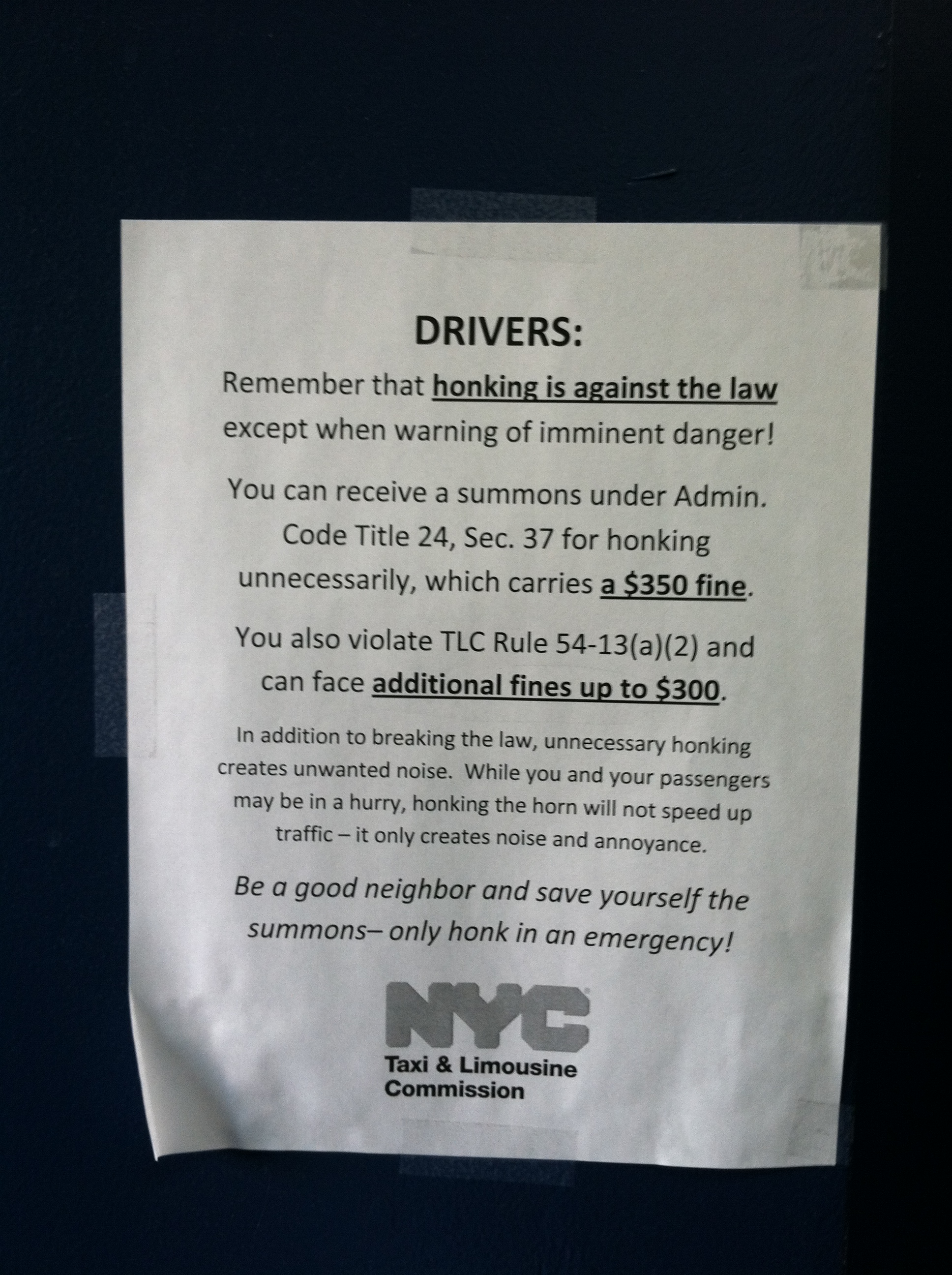
Posted at the garage

“Is it true that you can get a $350 fine for honking?”

“Yeah, and they can give fines for jaywalking as well.”

Lots of people ask me lots of questions when I’m driving them to their destinations. Sure enough, the honking ordinance always seems to come up. I haven’t ever seen anyone get a ticket for it but ask anyone trying to cross a busy Midtown Street at rush hour what he or she hears the most and odds are, it will be the chaotic din of car horns drowning each other out.

Like any big city, New York has so many rules and regulations that it’s almost impossible to keep track of them all, even though all drivers (in theory) review the TLC rule book during their time in Taxi School. Quick, guess what the speed limit on a street is? Yup, it’s 30. What must you do if you see a disabled vehicle or someone pulled over on the right lane/shoulder of a highway? Move over to the left and give at least one lane’s worth of cushion as you drive by. Wipers on? Better have your lights on as well, but that always fell under the “Don’t swing on 3-0” type of rule that’s unwritten. Here in New Jersey, “Keep right, pass left” is posted on every major highway as well but let’s face it, do the State Troopers really have time to enforce that one?

Without a doubt, the biggest pet peeve that this cabdriver has when it comes to traffic rules being blatantly disregarded has to be “No turn on red”. In most of America, it’s legal unless a sign is posted at a particular intersection. Of course, that is not the case in the 5 boroughs. One of the first signs you see upon entering the City after the obligatory “Welcome to New York” sign that has the Mayor and Borough President’s name is the sign stating that right turns on red are completely, totally illegal on city streets. Violating that law and getting nailed for it is the equivalent of running a red light.

Since last weekend was a holiday, lots of funny-looking license plates were floating around the city as I ensured that the throng of tourists, overtime workers, and fleet week sailors made their way around during the 3-day holiday. Along with seeing 3 red lights run and a minivan going the wrong way down the middle of 10 Ave over in Hudson yards, there were tons of vehicles turning right on red after stopping. This is the same as standing in Times Square with the subway map totally unfurled as your fanny pack-clad family members crowd around and attempt to figure out the labyrinthine routes while waiting in line for a table at a Riese Restaurant to open up. It’s a dead ringer that you’ve not from around these parts and when I see people tap my window to remind me that “your light isn’t working”, I know that they didn’t bother to brush up on the lay of the land. My passengers and I always get a kick out of that, even when they’re from out of town too and understand how the Taxis in the city operate.

Going back to the horns, it’s almost impossible *not* to honk over the course of a shift. I had one car a few months back that worked fine from top to bottom but the horn fuse was broken the entire time. Was I frustrated? Yes. Flashing my high beams to the Taxi or Livery vehicle in front of me that was dozing off at 3 in the morning just wasn’t the same and every time someone cut around me without a signal or dropped someone off in the most random of spots without using any flashers, I pressed down on the steering wheel where the horn would be. It’s all I could do to take my frustrations out.

Horn honking isn’t a right but it’s something that’s just as ingrained as making late-night food runs or getting in line to wait for someone to come out of work or a nighttime establishment when the streets turn to airport runways. Us drivers have our own odd subculture that I didn’t pick up on until I got behind the wheel of a yellow vehicle for 50 or 60 hours a week. Like anything else, there was a quick adjustment period but some of the customs that once seemed odd to be are now as routine as my 7 A.M. dinner or “pre-game” ritual of cleaning my vehicle out before I hit the road every evening.

Now if you’ll excuse me, I need to blow my horn. You’re in the way of my next fare!

Don’t Honk – West Side